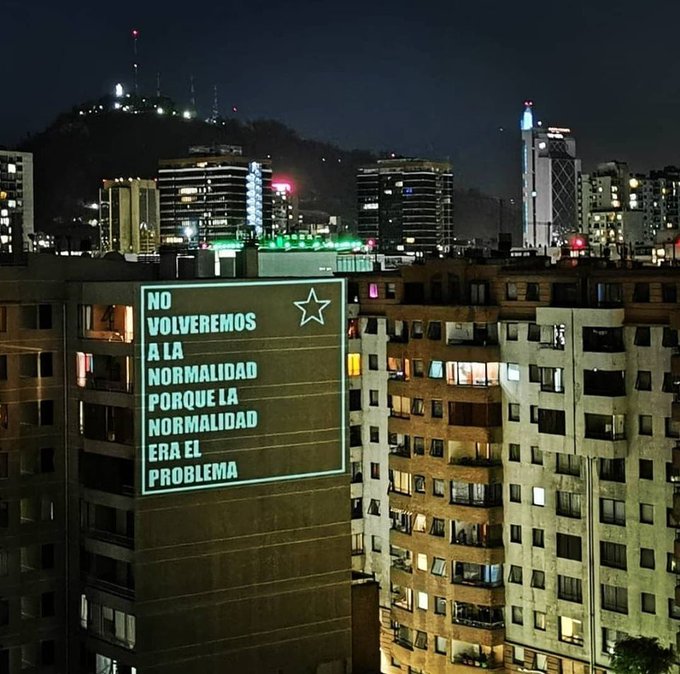
Climate campaigners get very irritated with media talking about the “new normal”, pointing out, quite reasonably, that for it to be the new normal would require a degree of climate stability that we have not got, nor have any prospect of getting while we continue to argue about whether net zero (the policy, remember, which is about moving us to a position where we don’t increase the amount of carbon in the atmosphere year after year) is affordable. Poverty and health campaigners got very irritated by the call to “get back to normal” after the pandemic, when it had so clearly demonstrated how our “normal” way of organising society had failed to protect so many of its citizens. As even I could see in March 2020:
My view is that some things that must be different post COVID are already clear. I think as a society we are going to demand more resilience, for example:
- Resilience of our health service – this means much higher levels of spending, building deliberate over-capacity into the system in normal times;
- Resilience of our food supplies, for example strengthening domestic supply chains;
- Resilience of our population, so that we do not have 1.6 million food parcels needing to be given out in a year by the Trussell Trust, in the absence of a pandemic, for instance; and
- Resilience of our infrastructure – to everything from floods to banking crises to pandemics to storms and heatwaves.
A picture circulating at the time of a Santiago apartment block with a projection onto it of “No volveremos a la normalidad porque la normalidad era el problema” (we won’t get back to normal because normal was the problem) was actually taken the previous year when the Chilean President had used the word “normality” to justifying lifting the state of emergency, leading to large protests:
But we all have trouble with fast moving situations, or even just moving situations. Remember the media coverage in the early weeks of Covid utterly focused on the number of cases going up each week rather than on the underlying pattern this showed, which had been predicted and could be responded to.
In the Institute and Faculty of Actuaries syllabus, subject CS2 Risk Modelling and Survival Analysis has 20% of its content on dealing with our trouble with moving situations via time series:
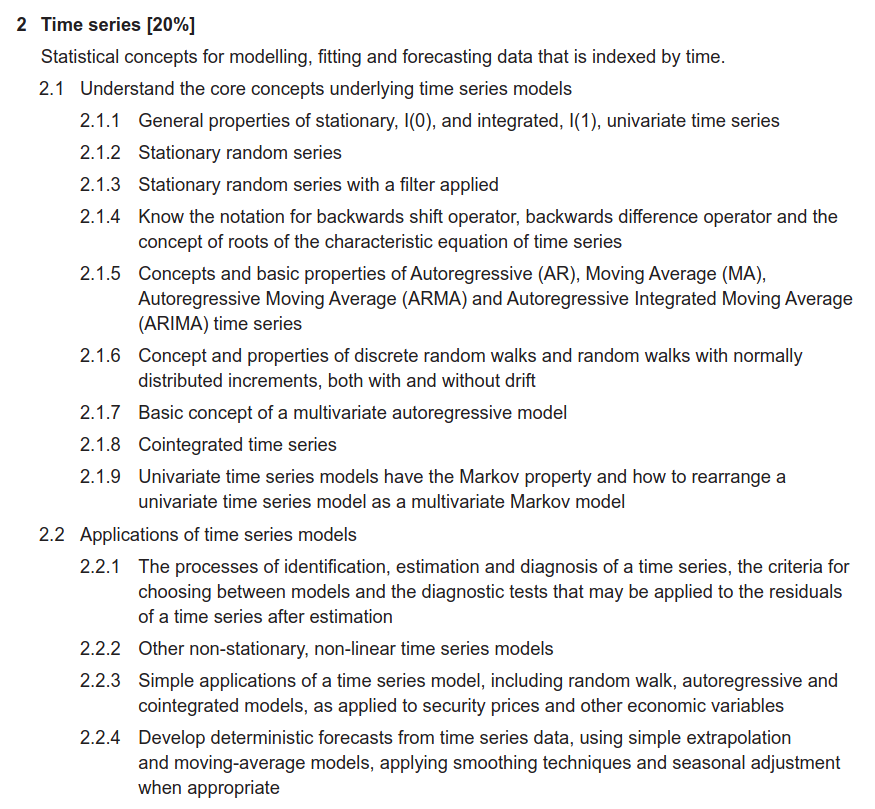
It boils down to a number of tricks to turn our moving situation into a non-moving or stationary situation, which we can then analyse.
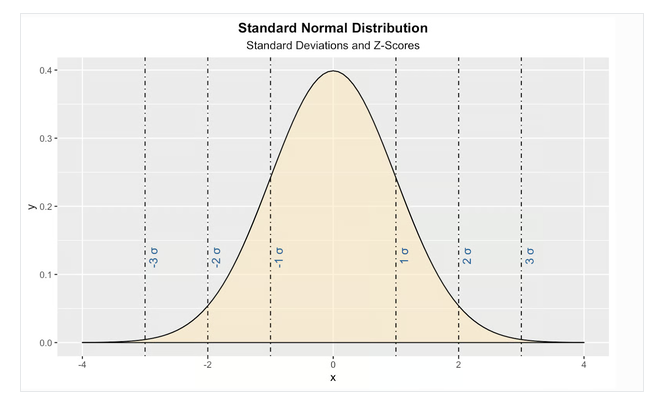
So not being able to deal with things that aren’t stationary is entirely normal. Indeed the Standard Normal Distribution, originally developed in response to a gambler’s query and another thing that we spend a lot of time transforming other distributions into if we can, has a fixed mean of 0 and a fixed variance (a measure of how far things stray from the mean) of 1:
Outside statistical analysis, we use different techniques to make things appear normal. Denial, ie ignoring the departure from normality, is a big one. When this one is no longer tenable in the face of mounting evidence that we are not in Kansas anymore, we often try and depict where we have got to as normal now. This will have been a good strategy in the past: once a natural disaster has passed, taking stock of what has been lost and what remains and working within these new parameters makes more sense than hankering back to how things were before the disaster struck.
However this strategy comes unstuck when one or both of two things are true:
- The disaster, or change-event more generally, is not a one-off but a continuing process.
- The way we were living before the disaster made the disaster more likely.
So, on climate change, both 1 and 2 are true. On the pandemic, 2 (if you define the disaster as the number of people who died during it, which I do) is clearly also true. And, although it may not be a continuing process, none other than the former Chief Scientific Advisor to the UK Government regards another pandemic as “inevitable”.
We have built systems to look at past disasters and, in particular, try and guard against 2. The Covid Inquiry is working its way through the evidence about the pandemic, and has already produced definitive evidence on how we could do things differently for those who wish to read it, but the reporting of its work is patchy, with sometimes unhelpful fixations on the wrong thing.
And denial tends to fight back as our go-to defence mechanism, which is why we often seem to need to have Public Inquiries about the same things again and again and again.
It is all quite normal. That is the problem.