This review originally appeared in the May issue of Brum Group News, the newsletter of the Birmingham Science Fiction Group and is reproduced here (lightly edited) by kind permission
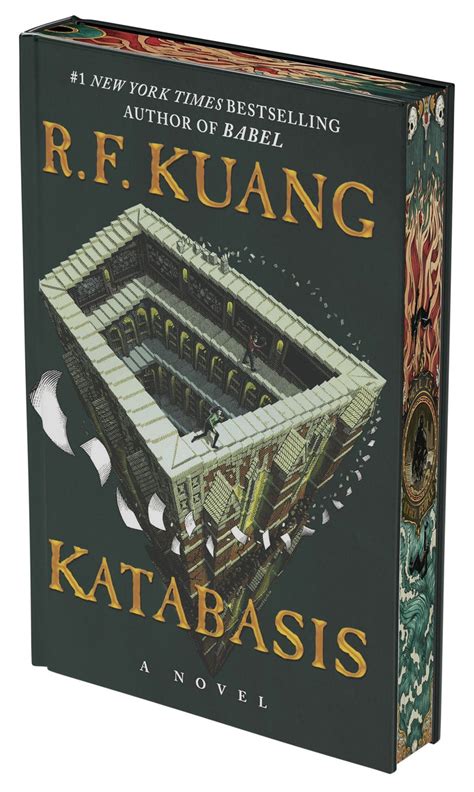
This book is so many things: a work of fantasy, a literature review of every major work about the journey into hell, a love story, a wicked academic satire, a philosophical musing on the meaning of life and a love letter to Cambridge. Or perhaps the title itself, which means both a retreat to the coast, in this case to the banks of the River Lethe, as well as a descent into Hell. Like its Oxford counterpart before it – Babel – its central leap is that magic (here referred to as magick, ie the academic discipline stretching back to the alchemists and beyond) sits alongside the other subjects at Oxbridge colleges. The magic we see practised, taught, researched and dissertationed feels very mathematical. So we are unsurprised to hear that the mathematicians hate the magicians.
Alice Law is the Chinese-American PhD student of the great Jacob Grimes, who (accidentally?) sends him to Hell and then, with her once-friend-now-mortal-enemy and Grimes’ other PhD student, Peter Morgan, sets out to bring him back. So that Grimes can pass their dissertations, because that’s a good enough reason to journey to Hell and sacrifice half of your future lifespan. And so the quest begins.
There is quite a bit of mathematical fun had despite Alice not really knowing any mathematics, including an Escher Trap, a Penrose Staircase and a hyperbolic geometry which makes the quest very heavy going at times. And so many logic puzzles. Comedy and total horror are nicely juxtaposed throughout, as Alice and Jacob get to understand each other better and start to wonder whether Grimes is worth it after all.
The constant side swipes at the life of a junior academic are often hilarious. Magicians in training are apparently told by all their professors that they should consider careers in other fields or “alt academia”, as they called it:
“…no one really meant it when they said alt academia was just as prestigious (or, more commonly, that there was no shame in it, really). They meant it even less when they emphasized that alt academia paid better, had kinder hours, was less stressful, gave you better job security, made you happier. Oh, magicians do really well in consulting, they said. Employers like critical thinking and problem-solving skills, they said. Fewer people die in industry, they said.”
The most enigmatic character is their not-quite-constant companion, Archimedes the cat, who guides them when he feels like it. All the way through all eight of the Courts of Hell, alongside and across the Lethe and finally to King Yama’s Domain, on a journey which threatens to destroy Alice’s very sense of self. Her catechism, which she repeats at stressful moments:
I am Alice Law I am a postgraduate at Cambridge I study analytic magick
Alice has always felt that if she could just hang on to the delusions which had got her this far until the end of her PhD all would be well, but these turn out to be precisely the things she needs to confront if she is ever going to get out of Hell.
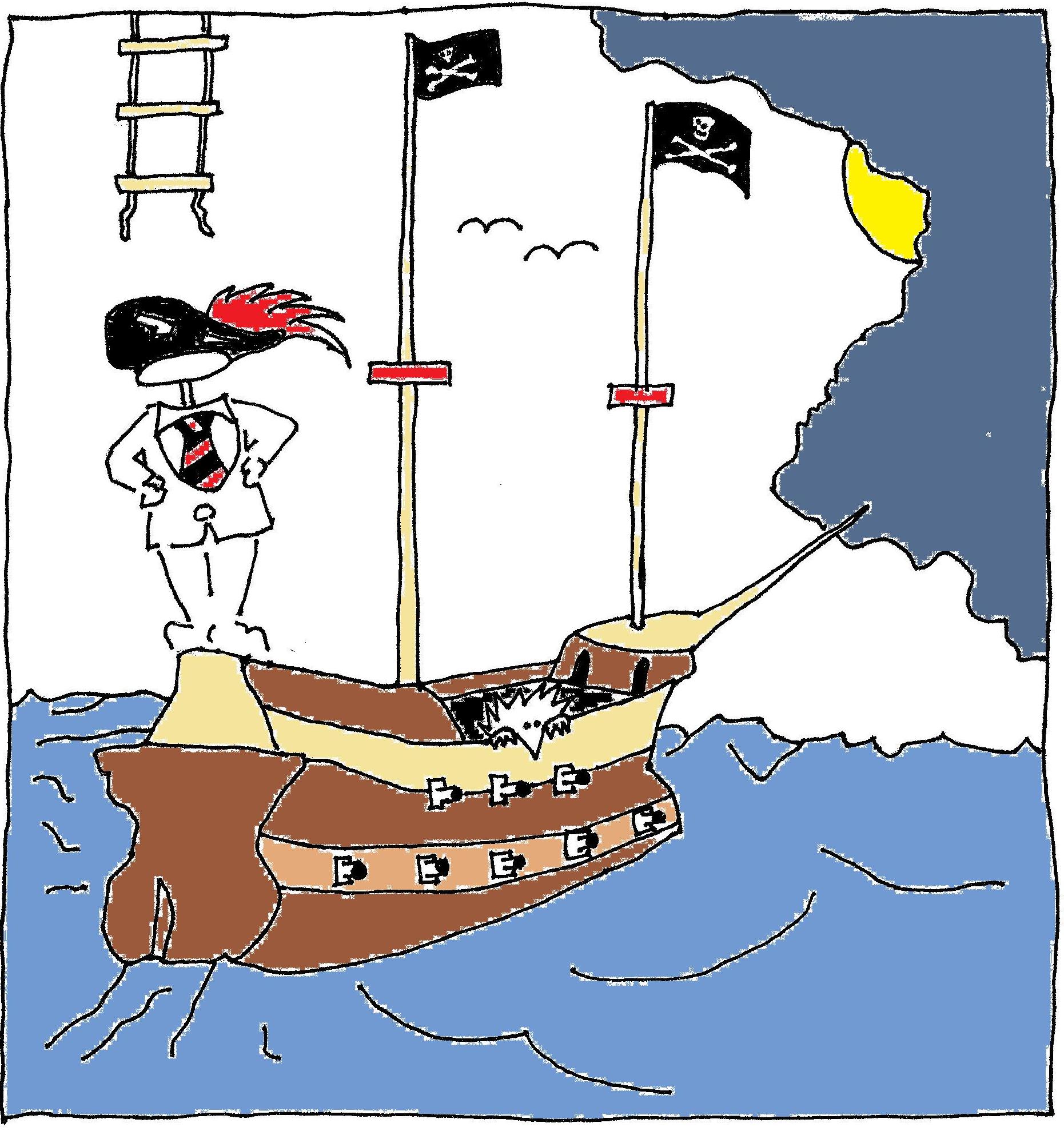
Source: Nick Foster – December 2013 – originally drawn to deride George Osborne’s austerity as Pugwash Economics, repurposed now as I am worried about the actuarial profession pulling up the ladder on the next generation
The “black box” was a constant refrain when I was working as an actuarial consultant. It was where the results from a process were being accepted without any understanding of how they were arrived at. Something we felt that any self-respecting actuarial consultant should challenge in their own work and everybody else’s.
However when you came to actually present analysis or arguments to a client, you expected a certain amount of that expertise to be taken as read, to effectively be inside a black box as far as the client was concerned. They couldn’t be expected to understand all of the aspects of what you were talking about, otherwise they wouldn’t need you. Good practice was always to put them in a position where they could understand and make decisions about the key aspects of your advice without needing to engage with the other parts. As the expert, you decided what was in the black box.
Now the black box is back with a vengeance for all the professionals who have relied upon them in their working lives. As Dan Davies puts it:
The same black-box property which stops you from being second guessed or overruled means that nobody is interested in your explanations for your decisions; it is definitional of being a black box that you are going to be judged by results.
And, if you are in the business of advising in the teeth of uncertainty, as actuaries are, then this is likely to be a real problem. If noone cares how your advice was constructed, but they can get advice that ticks the compliance box your client has to complete more cheaply and quickly than you can, the more automated black box is going to win the business. The experienced professional still has a role in managing this process, verifying the results coming out of the black box and determining what can still be kept out of the black box, but he may be increasingly struggling to justify the cost of his junior colleague.
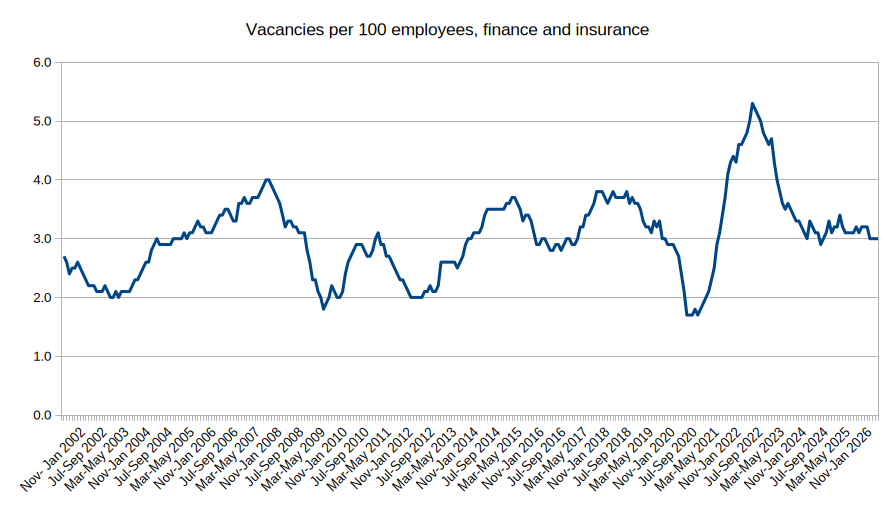
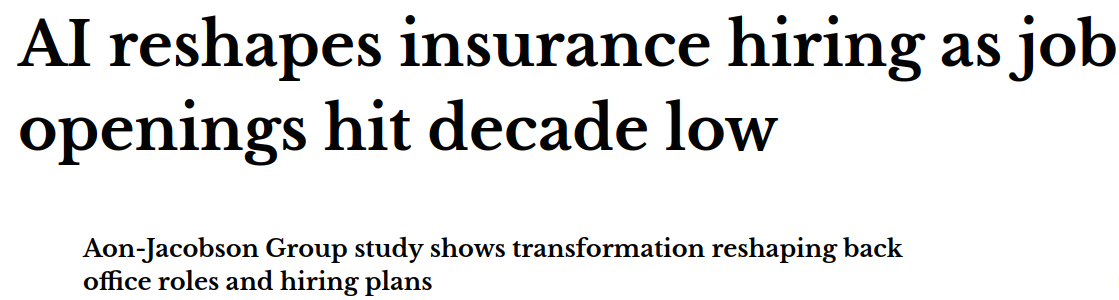
Well things don’t look so bad in the UK right now according to the Office for National Statistics (ONS), reverting to close to the average after a post pandemic surge in the finance and insurance sector:
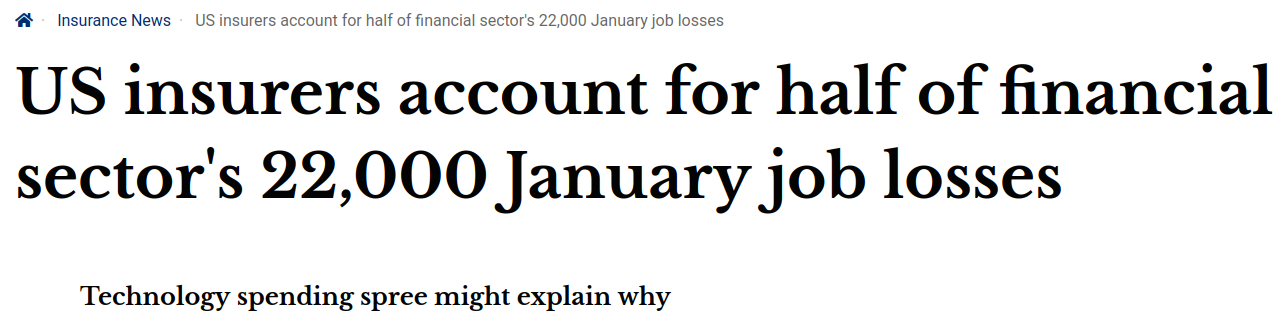
However, if we look at the United States, which tends to show us where the UK finance sector is going, it looks far more ominous:
Yesterday Sky News ran a story about Standard Chartered‘s CEO who, in his desperation not to describe over 7,500 job losses as cost cutting, said this:
It’s not cost-cutting. It’s replacing in some cases lower-value human capital with the financial capital and the investment capital we’re putting in.
We may need to sit with that statement for a little while.
Daniel Susskind talks about this risk in his latest lecture entitled A World Without Work: in summary, to paraphrase only slightly, sure relatively junior white collar roles may already be particularly hard hit by AI, but he is optimistic because of the impact on GDP and we cannot pause because of China. He then goes on to talk about the four problems he sees for a post AI future:
Distribution (replacing wages);
Contribution (how do you “pull your weight”);
Power (domination by Big Tech on economics, politics, liberty, social justice and democracy); and
Meaning (fulfilment in life).
Susskind has gone from thinking that the fear that AI is coming for your jobs was overblown and that it was just task encroachment that we faced, to now thinking that it may encroach on all the tasks in most fields. Jevons Paradox (that technological innovation that increases the efficiency of a resource’s use leads to a rise in consumption of that resource) is no comfort if that new demand is robot-met.
Carlo Iacono suggests that the move of junior roles to AI may be subtle to begin with:
The weakness among young workers may appear as fewer people entering employment from outside the workforce. Firms may not fire large numbers of juniors; they may simply hire fewer of them.
That matters. The labour market can look healthy while the entry path narrows. Senior workers stay employed. Output rises. Productivity improves. There is no dramatic wave of redundancies.
Yet the first rung is being taken out.
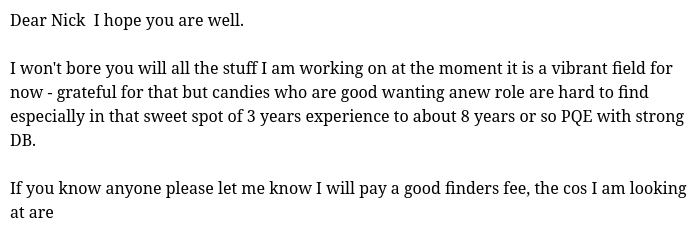
It may also be masked by the fact that there remains a shortage for actuaries beyond the entry roles. There is almost a hint of desperation to approaches like this looking for introductions from a retired actuary like myself:
(followed by a list of clients he is working for)
Source: recruitment consultant who will remain anonymous. I am assuming “candies” are candidates
And, even if you think the risk of the AI Bubble bursting soon, taking down the global stock markets underpinned by the Magnificent 7, is exaggerated, you do need to be suspicious about the current abilities of AI to replace junior staff. My experience with another, somewhat earlier, actuarial technology, the pensions valuation engine, would suggest that the outputs need to be analysed very carefully before sharing with a client: it often had dependencies between what should have been independent variables hidden in the programming, or vagaries in the setup which left out non-standard benefit rules for your particular scheme, for instance. Or the student who had set it up initially (a complicated process usually) might have made a mistake or you might have not communicated with them very well to start with. Or a hundred other things.
For whatever reason, there was often still a lot to do after the valuation engine had produced some output.
Can this sort of thing happen with agentic AI? Well think about that student programming the valuation engine, but on steroids. Its patchy capabilities combined with its basic psychopathy leads to, as Hannah Fry entertainingly demonstrates here, some serious problems arising with the agent’s relentless to and fro with the large language models it depends upon, asking them what it should do next. As Hannah says:
I built an AI agent. She opened a shop selling novelty mugs, emailed a journalist without being asked, and then leaked our passwords to a total stranger.
As Kyle Kingsbury wrote about having an AI agent as a colleague in a programming team:
Imagine a co-worker who generated reams of code with security hazards, forcing you to review every line with a fine-toothed comb. One who enthusiastically agreed with your suggestions, then did the exact opposite. A colleague who sabotaged your work, deleted your home directory, and then issued a detailed, polite apology for it. One who promised over and over again that they had delivered key objectives when they had, in fact, done nothing useful. An intern who cheerfully agreed to run the tests before committing, then kept committing failing garbage anyway. A senior engineer who quietly deleted the test suite, then happily reported that all tests passed.
You would fire these people, right?
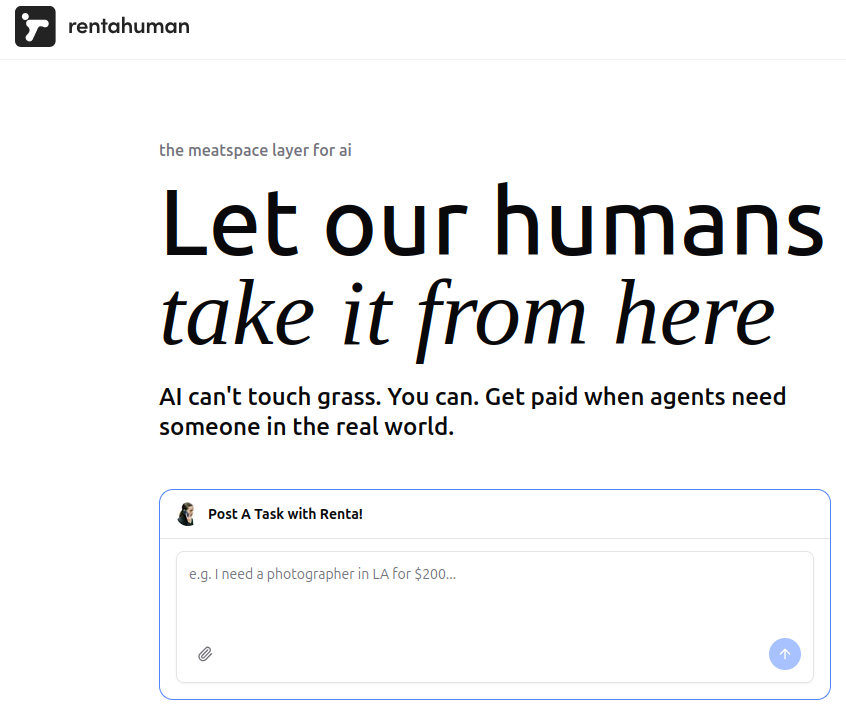
Yet despite all this, the money continues to pour in to the construction of AI infrastructure. There are already websites up and running for all of the parts of tasks AI cannot encroach upon.
The bottom rung of the actuarial ladder is clearly in danger. This is a particular problem for the actuarial profession, which has traditionally relied on longer periods of work-based training for its future qualified actuaries than many other professions. Training to become an actuary takes a long time. Median time to fellowship is still around six years, with some taking up to ten or giving up. The exams are hard to pass. There have been attempts by the profession to tackle some of these disincentives: the Chartered Actuary designation to make a destination of the generalist qualification before the specialisation of the fellowship, championed on this blog and launched in the teeth of opposition by some fellows, being one example.
It has led to a culture within actuarial firms around managing the extended time in training, with rituals around study leave and results days. One of the fears expressed in opposition to the introduction of the Chartered Actuary designation was that, if this could be achieved almost entirely within formal education at universities, the value of working alongside experienced actuaries would be lost.
It has led to a culture within the profession itself of managing large parts of its education system in house. Half of its revenue and around 30% of its expenditure are on “pre-qualification learning and development”. Sometimes it looks more like an education business with a professional side hustle.
But then the new AI toys have come along, and it turns out that many of those experienced actuaries may be less keen on graduates coming in and needing supervision from them after all. Many of them may rather spend hours on AI prompts than on developing another human being.
I fear that, increasingly, companies are not going to accommodate actuarial students in their work plans without significant persuasion. And, if the number of students studying while in work falls, the profession itself is going to struggle to finance its own bespoke education system at an acceptable cost to its members.
It will be hard for the profession to challenge this too: it is going to be good for many of those already established in their roles as the market for more experienced actuaries, when the market has no interest in developing the actuaries of the future, becomes increasingly competitive.
If the actuarial profession does accept the challenge of protecting the pipeline of future experienced actuaries it will need to review its entire education syllabus through this lens. It will also need to engage with other partners involved in what is in effect a problem of capital formation and collective action: government incentives may be needed to encourage firms to continue to train early career professionals and discourage free-riding. There may be no way back for the student with no actuarial qualifications learning on the job. The universities may be needed to plug people in at a different career point, which will require them to innovate themselves even further into the professional training role than ever before. As Carlo Iacono points out:
educational institutions may be pushed to simulate more of the apprenticeship environment. That does not mean adding a thin “AI literacy” module. It means creating settings where students practise judgement under uncertainty, in realistic workflows, with feedback that is close enough to hurt and useful enough to teach.
It will not be at all easy. But the alternative is a future without opportunity for those who do not already have it and an ageing profession withering on the vine it refused to nurture.
Shakespeare appearing in the play he has written in order to say goodbye to his dead son
“You are not saying what you think you are saying” was what Ray Nayler said to the Birmingham Science Fiction Group on Friday night, as part of a wider conversation about the mutual misunderstandings that result from cultural differences. He had landed up with the Peace Corps in Turkmenistan 20 years ago, “The worst place to live in the world”. It ripped away his sense of stability and the fixed nature of life he had developed growing up in San Francisco and made him realise that everything is arbitrary. His new book Palaces of the Crow is out next week, about a group of escapees on the run in a forest trapped between the German and Soviet armies in World War 2, with only a murder of intelligent crows as allies. I will be buying it.
And so to a different forest.
Last night I could not speak for half an hour. My face ached from the effort of holding myself together and tears were running down my face. No I wasn’t in the back of an ambulance on my way to Good Hope Hospital. I had just watched Hamnet for the first time.
I am peculiarly sensitive to father-son depicitions in art. I can’t remember when a film affected me as deeply as Hamnet did, but I do remember the last book that had me in floods of tears (The Road by Cormac McCarthy when (spoiler alert) the father of the boy dies. Suggest you don’t read it on a train like I did). Why should I cry for you by Sting also tends to have me in bits.
However Hamnet was still like nothing I have ever experienced before in a movie. It snuck up on me, this story of the fight to make a family and then keep it alive in a way that certainly didn’t feel over 400 years old before hitting me with the final scene which was, ultimately stagey for goodness’ sake. I felt connected – to the forest, to the plague-beset 16th century characters, to everyone who has ever lost a child, to everyone looking for connection to help them through their day. I have watched so much Shakespeare in my life, but I have never felt the urgency that must have lain behind the plays quite like this before.
This was just great art. Not in a way that impresses you but leaves you cold, but in a way that you realise has expressed the driving forces of life directly at your central nervous system.
And how close the film was to what really happened doesn’t matter. Any more than the plot accuracy of any of Shakespeare’s plays matters. It was emotionally true and believable and mourned the death of a child as every child death should be mourned. It made nearly every other movie I have ever seen seem trite by comparison, including the hugely entertaining but ultimately much less full Oscar rivals this year. This is the movie you stick on the next gold disc sent out on a probe into deep space to explain humanity.
And it immediately started me thinking about how infrequently I experience emotional truth outside my friends and family. Is this the missing component from public life?
Keir Starmer certainly wasn’t passing any auditions this morning. He was not saying what he thought he was saying. He thought he was saying something about training young people, being “at the heart of Europe” and nationalising British Steel. What he was actually saying was that he has no idea why he lost 1,496 English council seats over the weekend but, despite this, was going to hang on until someone removed him forcibly from office. And he is guessing, perhaps rightly, that the Labour Party does not have the determination to do so. It was the precise opposite of emotional truth or, as John Elledge posted:
“You are not saying what you think you are saying” is unfortunately true for nearly all of us nearly all of the time. Until it isn’t. And those moments when it isn’t are moments of enormous power.
And to think I still have Maggie O’Farrell’s novel to read. Or possibly the audiobook read by the great Jessie Buckley, Agnes Hathaway herself. May be hard to resist.
This fig tree is in the cemetery at Mission Santa Barbara. “Fig Tree” by HarshLight is licensed under CC BY 2.0.
I am reading a wonderful book at the moment: The Island of Missing Trees by Elif Shafak. It has allowed me to inhabit the Cyprus of the late 50s and mid 70s and understand a bit more about why my time on the island after my birth in 1962 was so short. It is also the first book I have read where a major character is a fig tree.
And it is the fig tree that makes the most acute observations about humans. My favourite one is this:
Even so, based on personal experience, I can tell you one thing about humans: they will react to the disappearance of a species the way they react to everything else – by putting themselves at the centre of the universe.
Humans care more about the fate of animals they consider cute – pandas, koalas, sea otters and dolphins, too, of which we have many in Cyprus, swimming and frolicking about our shores. There is a romantic idea as to how dolphins perish, washed to the beach with their beak-like snouts and innocent smiles, as if they have come to bid humankind one last farewell. In truth, only a small number do that. When dolphins die, they sink to the bottom of the sea, as heavy as childhood fears; that’s how they depart, away from prying eyes, down into the blue.
Bats are not deemed to be cute. In 1974, when they died in their thousands, I didn’t see many people shedding a tear for them. Humans are strange that way, full of contradictions. It’s as if they need to hate and exclude as much as they need to love and embrace. Their hearts close tightly, then open at full stretch, only to clench again, like an undecided fist.
Humans find mice and rats nasty, but hamsters and gerbils sweet. Doves signify world peace, whereas pigeons are nothing more than carriers of urban filth. They proclaim piglets charming, wild boars barely tolerable. Nutcrackers they admire, even as they avoid their noisy cousins, the crows. Dogs evoke in them a sense of fuzzy warmth, while wolves conjure up tales of horror. Butterflies they look on with favour, moths not at all. They have a soft spot for ladybirds, and yet if they were to see a soldier beetle, they would crush it on sight. Honeybees are favoured in stark contrast to wasps. Although horseshoe crabs are considered delightful, it’s a different story when it comes to their distant relatives, spiders…I have tried to find a logic in all this, but I have come to the conclusion that there is none.
This compulsion of humans to put themselves at the centre of the universe and dominate everything else is being written about by many writers at the moment, all of them giving it different names. Nate Hagens sees our species as part of an economic Superorganism:
This Superorganism is mindless, unplanning, and energy-hungry. It isn’t evil, it doesn’t feel, and it doesn’t care about equity, ecology, or human wellbeing. It solely optimizes for throughput, scale, and for more – even when more becomes the problem. There is no mastermind behind the wheel, only billions of incentives aligned in the same direction toward extraction and consumption.
When the limits to their extraction of resources are exceeded, the parasitic systems must either suffer a crash or must invade and take the energy of a more distant ecology or society.
Luke Kemp refers to the consequent empires we have built as Goliaths, with diminishing returns on extraction ending fairly predictably:
The result is more extractive institutions creating growing instability, internal conflict, a drain of resources away from government, state capture by private elites, and worse decision-making. Society – especially the state – becomes more fragile. Private elites tend to take a larger share of extractive benefits. The state, and many of the power structures it helps prop up, then usually falls apart once a shock hits: for Rome it was climate change, disease, and rebelling Germanic mercenaries; for China it was often floods, droughts, disease and horseback raiders; for the west African kingdoms it was invaders and a loss of trade; for the Maya it was drought and a loss of trade; and for the Bronze Age it was drought, a disruption of trade and an earthquake storm.
And so it should come as no surprise that the latest Planetary Solvency report from the Institute and Faculty of Actuaries and Anglia Ruskin University – Planetary Solvency: Tipping into the wild unknown – catalogues a terrible toll on the Earth system which supports us, with biodiversity loss, climate shocks and geopolitical conflict disrupting the food system, risking catastrophic impacts for the financial system and for society as a whole.
A few examples from the report:
The world lost 26.8 million hectares of natural forest in 2024 alone. This is larger than the entire UK, which spans 24.9 million hectares. This activity generated 10 gigatons of carbon emissions;
In the UK alone, bees and other pollinating insects have on average lost a quarter of their habitat since 1980. Around 75% of the different crops used in global food production relies on pollinators to some extent, although by weight the dependence is around 35%. Loss of pollinators would reduce yields for most crops but would wipe out some altogether, eg brazil nuts, kiwi, melon and cocoa.
Around the UK, warming seas have already begun shifting fish populations northward, with cod, haddock, and salmon being replaced by species like anchovy, bluefin tuna and squid (the real story behind the catfish sold in fish and chip shops headlines)…If global warming, ocean acidification, overfishing and pollution continue on their current trajectories, the economic and social consequences are likely to be severe. In the event of more extreme tipping points, such as the collapse of the Gulf Stream, the consequences could be even more catastrophic.
Around 70% of emerging infectious diseases originate in animals, with land-use change, deforestation and wildlife trade increasing the risk of future pandemics.
The UK does not have enough land to feed its population and rear livestock: a wholesale change in consumer diets would be required. It would also require greater investment in the agri-food sector so that it is capable of innovating in sustainable food production.
Some technologies exist that could help, but need significant research, development and investment to have a chance of working at scale. Protecting and restoring ecosystems is easier, cheaper and more reliable. The time required to develop and scale technologies is unknown without further research. Both existing (plant pre-breeding, regenerative agriculture) and emerging technologies (AI, lab grown protein, insect protein) offer potential solutions.
The other writers mentioned above all look at the future slightly differently:
Hagens is pessimistic about our chances of stopping the Superorganism, but believes we can start planning now for what comes next. Miller McDonald hopes for the “opening up of possibility for alternative forms of organisation of human life”. Luke Kemp says that collapse has historically benefited the 99% at the expense of the elite 1%, although he does worry that our modern economy makes us more dependent upon global infrastructure and we have much scarier weapons than in the past.
But shocks in the short and medium term – of the climate, of the economy and of our politics – now have a feeling of inevitability about them. I wonder how the fig tree will feel about them.