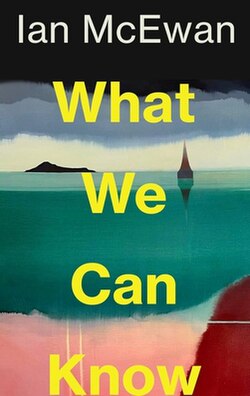
What We Can Know by Ian McEwan is a difficult book to categorise. Some might call it “cli-fi”, as it sets itself in a future significantly altered by human actions and the landscape’s response to those. The Sunday Times appears to think that it might have created a new genre entirely. I think it is best seen as an Oxford novel, even if many of Oxford’s landmarks are submerged for large parts of it. Radiohead even gets a mention. As the petty snobberies and clandestine affairs of academics play out on the much-changed landscape of 2119, earnest academics Tom Metcalfe and Rose Church explore the petty snobberies and clandestine affairs of 2014 and the quest for the long-lost poem from that year. “A Corona for Vivien” certainly feels like a poem which belongs in a past of barn conversions and dinner parties.
For these academics, The Derangement – which is how they refer to the developing crisis mindset between 2015 and 2030 – is just a backdrop to what they regard as the important drama of their lives. It is followed by the first of several climate wars in 2036 involving nuclear weapons, ironically causing a cooling before the Inundation of 2042 causes the deaths of 200 million, with the UK’s population halving and life needing to be eked out on a cluster of small radioactive islands.
I set this out because the book, while occasionally referring to the eeriness of things, carries on with the work obsessions and love lives of its characters pretty much regardless. If What We Can Know is to be believed, academia carries on much as before, with lectures and seminars and essay marking, despite all of this. For humanities departments currently under the cosh despite the absence so far of a nuclear war, this may seem unlikely.
My grumpiness about all this may be partly due to the fact that I am writing this during a series of record breaking heatwaves and unbudgeable heat domes, but I feel like I have had to make more accommodations to the climate – cancellation of plans, a whole new routine at home with the single aim of keeping the thermometer from moving up any further – than McEwan’s characters seem to be doing in their post-not-quite-apocalyptic lives. Whereas one visit to the swimming pool last month was reduced to bobbing about in water along with a couple of dozen others in a manner reminiscent of the wet bulb event at the start of Kim Stanley Robinson’s The Ministry for the Future, McEwan’s only concession to a future world that can still apparently support an academic entirely focused on a 105 year old poem which has never been seen since, seems to be that journeys anywhere are now more difficult and dangerous.
And yet Tom then travels to Snowdonia (where the Bodleian is now housed) fairly easily. And he and Rose then travel to the flooded valleys of the Cotswolds to attempt to retrieve the poem. The only difficult journey described is once they get on to the target island and have to navigate through thick vegetation without satnav (GPS is no more) or even rudimentary hiking skills between the two of them. At one point we are told the internet is on the way out and at another that there is a National Artificial Intelligence which remembers everything you have ever told it.
This book seems as complicit in the “crisis of realism in fiction” as McEwan, via Rose, accuses everything else written between 2015 and 2030 of being. However it is an entertaining Oxford novel, with tense conversations in parked cars and breathtaking egomaniacs everywhere you look.
What we can’t know is what Tom and Rose will make of it in 100 years’ time.