Climate campaigners get very irritated with media talking about the “new normal”, pointing out, quite reasonably, that for it to be the new normal would require a degree of climate stability that we have not got, nor have any prospect of getting while we continue to argue about whether net zero (the policy, remember, which is about moving us to a position where we don’t increase the amount of carbon in the atmosphere year after year) is affordable. Poverty and health campaigners got very irritated by the call to “get back to normal” after the pandemic, when it had so clearly demonstrated how our “normal” way of organising society had failed to protect so many of its citizens. As even I could see in March 2020:
My view is that some things that must be different post COVID are already clear. I think as a society we are going to demand more resilience, for example:
Resilience of our health service – this means much higher levels of spending, building deliberate over-capacity into the system in normal times;
Resilience of our food supplies, for example strengthening domestic supply chains;
Resilience of our population, so that we do not have 1.6 million food parcels needing to be given out in a year by the Trussell Trust, in the absence of a pandemic, for instance; and
Resilience of our infrastructure – to everything from floods to banking crises to pandemics to storms and heatwaves.
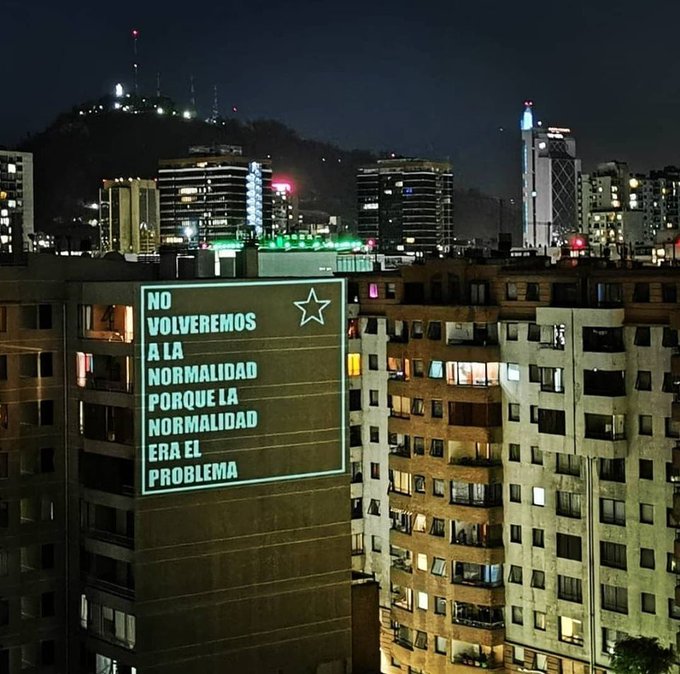
A picture circulating at the time of a Santiago apartment block with a projection onto it of “No volveremos a la normalidad porque la normalidad era el problema” (we won’t get back to normal because normal was the problem) was actually taken the previous year when the Chilean President had used the word “normality” to justifying lifting the state of emergency, leading to large protests:
But we all have trouble with fast moving situations, or even just moving situations. Remember the media coverage in the early weeks of Covid utterly focused on the number of cases going up each week rather than on the underlying pattern this showed, which had been predicted and could be responded to.
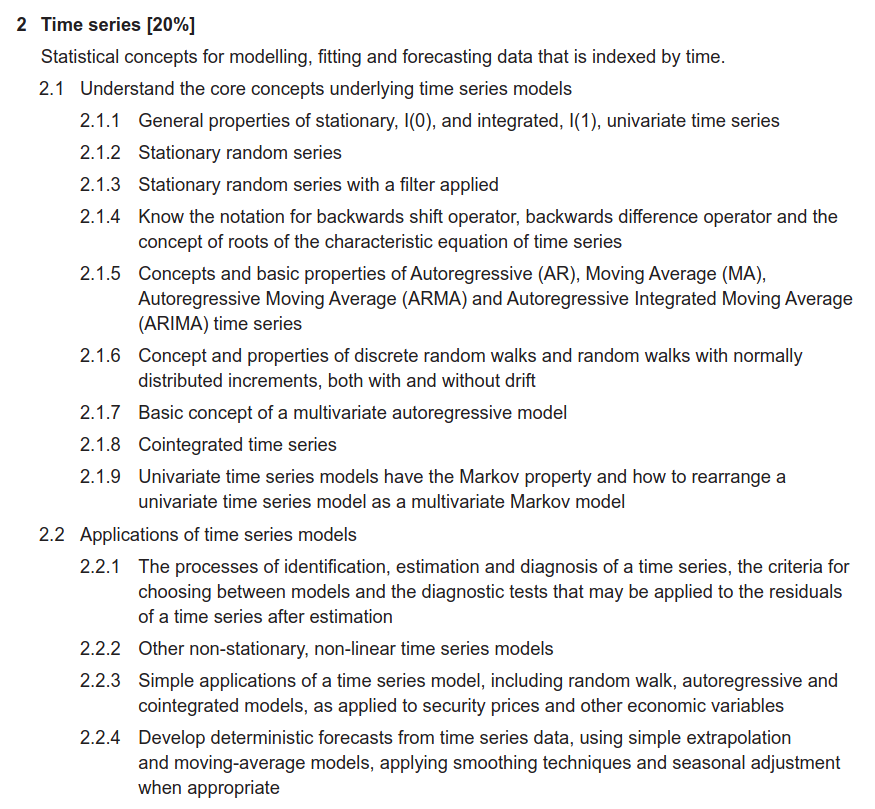
In the Institute and Faculty of Actuaries syllabus, subject CS2 Risk Modelling and Survival Analysis has 20% of its content on dealing with our trouble with moving situations via time series:
It boils down to a number of tricks to turn our moving situation into a non-moving or stationary situation, which we can then analyse.
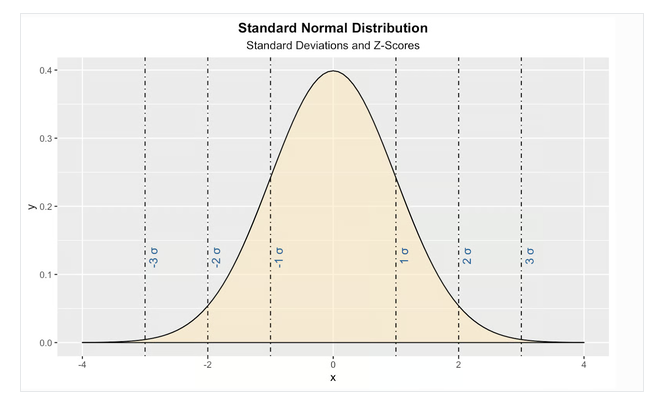
So not being able to deal with things that aren’t stationary is entirely normal. Indeed the Standard Normal Distribution, originally developed in response to a gambler’s query and another thing that we spend a lot of time transforming other distributions into if we can, has a fixed mean of 0 and a fixed variance (a measure of how far things stray from the mean) of 1:
Outside statistical analysis, we use different techniques to make things appear normal. Denial, ie ignoring the departure from normality, is a big one. When this one is no longer tenable in the face of mounting evidence that we are not in Kansas anymore, we often try and depict where we have got to as normal now. This will have been a good strategy in the past: once a natural disaster has passed, taking stock of what has been lost and what remains and working within these new parameters makes more sense than hankering back to how things were before the disaster struck.
However this strategy comes unstuck when one or both of two things are true:
The disaster, or change-event more generally, is not a one-off but a continuing process.
The way we were living before the disaster made the disaster more likely.
So, on climate change, both 1 and 2 are true. On the pandemic, 2 (if you define the disaster as the number of people who died during it, which I do) is clearly also true. And, although it may not be a continuing process, none other than the former Chief Scientific Advisor to the UK Government regards another pandemic as “inevitable”.
We have built systems to look at past disasters and, in particular, try and guard against 2. The Covid Inquiry is working its way through the evidence about the pandemic, and has already produced definitive evidence on how we could do things differently for those who wish to read it, but the reporting of its work is patchy, with sometimes unhelpful fixations on the wrong thing.
And denial tends to fight back as our go-to defence mechanism, which is why we often seem to need to have Public Inquiries about the same things again and again and again.
Triangulation was about the only nearly plausible justification given at school for learning trigonometry. You can estimate the height of that tree without actually climbing the tree and dropping a tape measure, you just need the distance to the tree and the angle the top of the tree makes from where you’re standing.
Triangulation with satnavs (measuring your distance from three satellites) narrows your position down to two points, although the one you’re using probably uses more like 10 to increase accuracy and be robust against rogue measurements.
However, according to Verywellmind.com, triangulation in psychology means:
…a manipulation technique where one person involves a third party in a conflict to gain control or create division. This tactic is common in toxic relationships and among those with certain personality disorders, like narcissism and borderline personality disorder. Recognizing the signs and setting boundaries can help you protect yourself from its harmful effects.
Which is where it enters our political, business and personal lives of course. In politics, former US President Bill Clinton is most closely associated with triangulation. As Nesmith and Quirk have said in their book Inside the Presidency of Bill Clinton:
In this strategy, Clinton would stand firm on partisan Democratic positions when they were popular. On issues where Republican positions were more popular, however, Clinton would take advantage of the current Republican Congress’s tendency to overreach: he would make major concessions from conventional Democratic policies and adopt centrist positions that would have broader support than the Republicans’ offerings. By such systematic, instrumental positioning, Clinton hoped to win politically on most issues, no matter which party had the initial advantage in public opinion.
This approach was then adopted by Tony Blair with New Labour and has become pretty mainstream in politics ever since. Keir Starmer perhaps took it to new extremes with his Ming Vase strategy:
The Ming Vase strategy’s underlying premise was that, at least in matters of high political salience, policy-making should be above all driven by perceived electoral advantage. The metaphor was that Labour should treat its prospects as precarious and fragile, and that the utmost caution and prudence must be exercised in developing policy. As the term is used here, the Ming Vase strategy can be encapsulated in terms of two broad principle, opinion alignment and power accommodation. The former held that on issues which figure prominently on the public’s agenda (which of course excludes policy in many areas) policies must be adapted as closely as possible to voters’ perceptions and preferences as these can be culled from focus groups. The latter stipulated eschewing as far as possible policy options that were likely to antagonise or estrange the major constellations of power in society, those organised interests which had the capacity both to influence mass opinion and to affect the capacity of a government to deliver its policies—most notably the City and major corporations. The two arms of the strategy tended to be mutually reinforcing, in that both emphasised the need for circumspection, the avoidance of controversial and ambitious policies, and an accent on reassurance. We are not claiming that the Ming Vase strategy, as an operational code, was the sole determinant of decision-making behaviour, but rather that it was the weightiest.
And when opinion alignment and power accommodation (ie public opinion and the views of, say, powerful business lobbies) are in conflict? Well you have to pretend to be doing one thing while doing another. And there were a whole succession of examples of Starmer not acting as most of his backbenchers had been led to expect a Labour prime minister to act and putting it down to the fiscal rules they were operating under until Andy Burnham finally put him out of his misery. But the fiscal rules have remained.
These sorts of strategies ultimately tend to come unstuck because they underestimate the voters. Most people understand that our problems aren’t easy to solve, but if you make grand pronouncements about transforming politics while constraining your room for manoeuvre within fiscal rules set to appease particular interests which you don’t come clean about, then ultimately you will be regarded as untrustworthy. As you will also fail if you pin all of societies ills on desperate people taking their lives in their hands on small boats in the English Channel, and then find that none of those problems have disappeared but you now also have something resembling Trump’s Immigration and Customs Enforcement (ICE) patrolling the seas.
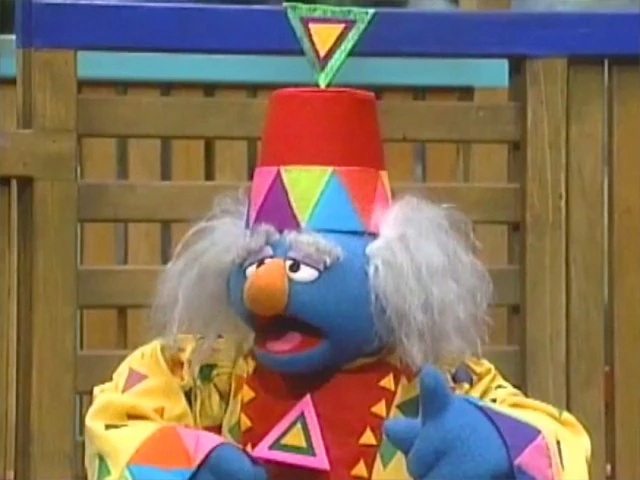
The Grand High Triangle Lover from Sesame Street is always accompanied by Norman, who bangs a triangle to get the crowd’s attention for his boss. Think of Norman as a lobby journalist. The Grand High Triangle Lover likes to tell the story of how he became The Grand High Triangle Lover by managing to pull sticks from a stone and making them into a triangle. However Norman broke the big scoop that in fact his boss just found a hat with triangles on it one day.
It sounds like a normal day in our politics, but these are muppets. Recognise the signs and set boundaries. Let’s not let them assume the rest of us are.
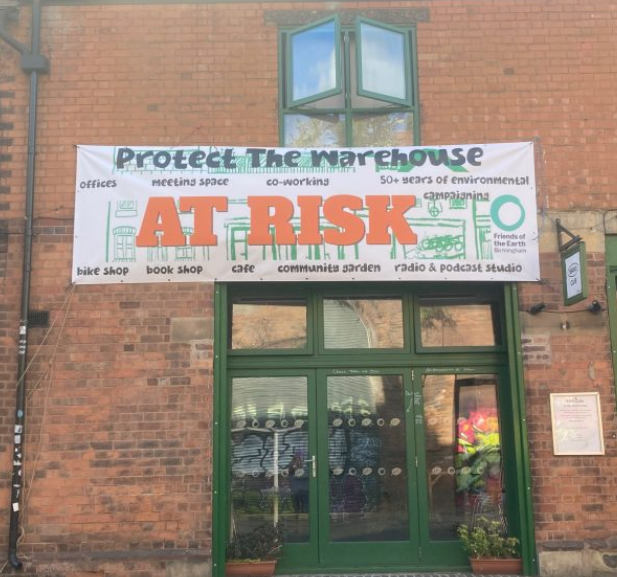
The Friends of the Earth Warehouse on Allison Street – home to the Birmingham Science Fiction Group since January 2024
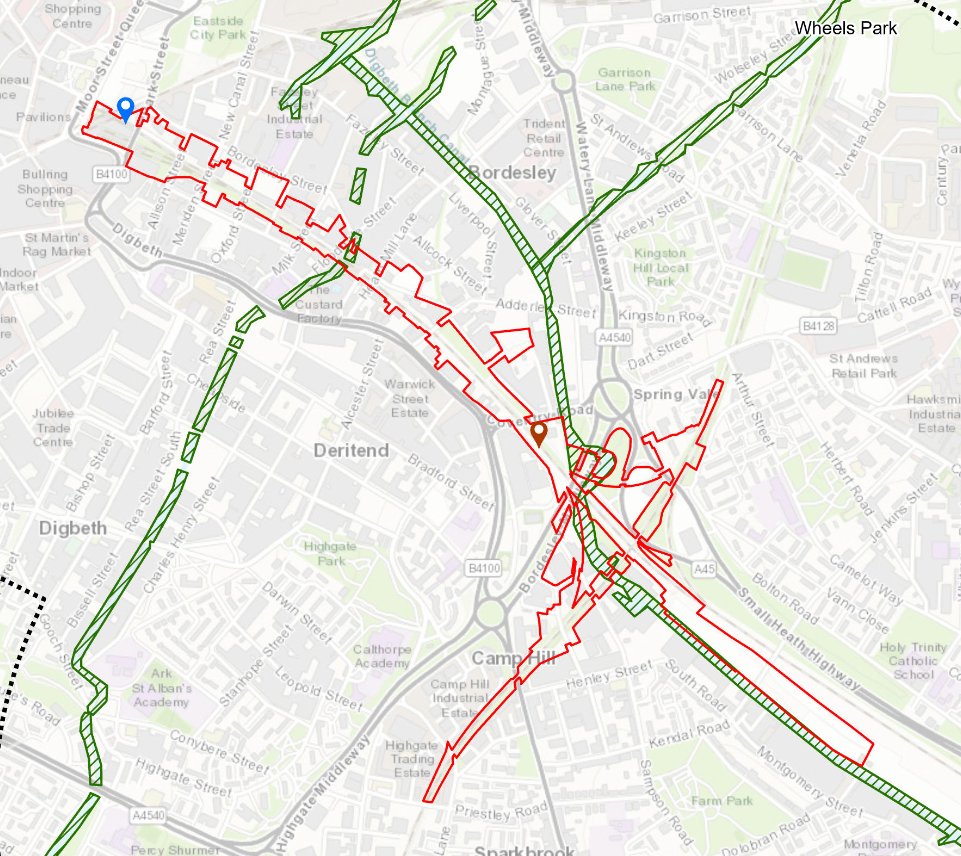
Like many people, when I first heard about it, I assumed it was something to do with HS2. HS2 has been quietly munching its way through tonnes of cement, hard core, steel and oh-so-much-money that the site – part sandpit, part go kart track in appearance – has become part of the landscape on entering and leaving Birmingham. But no, this is in fact one of those unsexy transport infrastructure projects that have in the past seemingly been shelved whenever they had the misfortune to be located outside London as a result of the ever ballooning HS2 budget. It obviously is linked to the increase in traffic anticipated as a result of HS2, but as this video explains, this is an independent project whereby the already creaking rail capacity of Birmingham is to be expanded via a more coordinated use of New Street and Moor Street stations, with the traffic to and from everywhere else distributed via the newly constructed East and West Chords. At the expense of Bordesley station and a large swathe of Digbeth.
As you can see, the top left end of the X-marks-the-spot gash across Digbeth that describes the scheme boundary contains Allison Street, home of the Birmingham Science Fiction Group (BSFG) since Millennium Point kicked us out at the end of 2023. We were very grateful at the time, and remain so. As a not-for-profit, some might say even a shoestring, organisation there are many venues which are not accessible to us for the same reason that Douglas Adams (more from him below) didn’t have a copy of Europe on Five Dollars a Day when hitchhiking in 1971: because we aren’t “in that financial league”. It would be a considerable struggle for us to find another home which offered us as much, including accommodation for disabilities and mobility issues in a central location within Birmingham, but was also in our financial league.
The parallels with Douglas Adams’ Hitchhiker’s Guide to the Galaxy are almost irresistible (and specifically the announcement of Prostetnic Vogon Jeltz of the Galactic Hyperspace Planning Council, that “the plans for development of the outlying regions of the Galaxy require the building of a hyperspatial express route through your star system, and regrettably your planet is one of those scheduled for demolition”) and Friends of the Earth have not tried to, from A (Weary) Climate Activist’s Guide To The Galaxy by Jane Charlesworth, to the Don’t Panic signs dotted about their website. The latter is a reference to the fact that we have until 2029 to campaign against the details of the plan, rather than the 12 minutes Arthur Dent got.
However the current consultation only lasts until 28 August and details of the current proposals and how you can get involved are here.
In addition to the Warehouse, venues on Lower Trinity Street, including Club Colette, The Night Owl, Luna Springs, XOYO, and Mama Roux’s are also under threat of demolition. Friends of the Earth are careful not to oppose the rail improvements in principle, as obviously anything that increases the capacity of public transport to replace private car use is an environmental win, but are confident that it would be possible to achieve the aims of the project with a significantly smaller project bootprint across Digbeth. They have approached the many groups operating out of the Warehouse such as BSFG to get involved in the campaign to revise the Midland Rail Hub (MRH) Alliance‘s (the consortium of Network Rail and a number of private firms which are driving the project) plan.
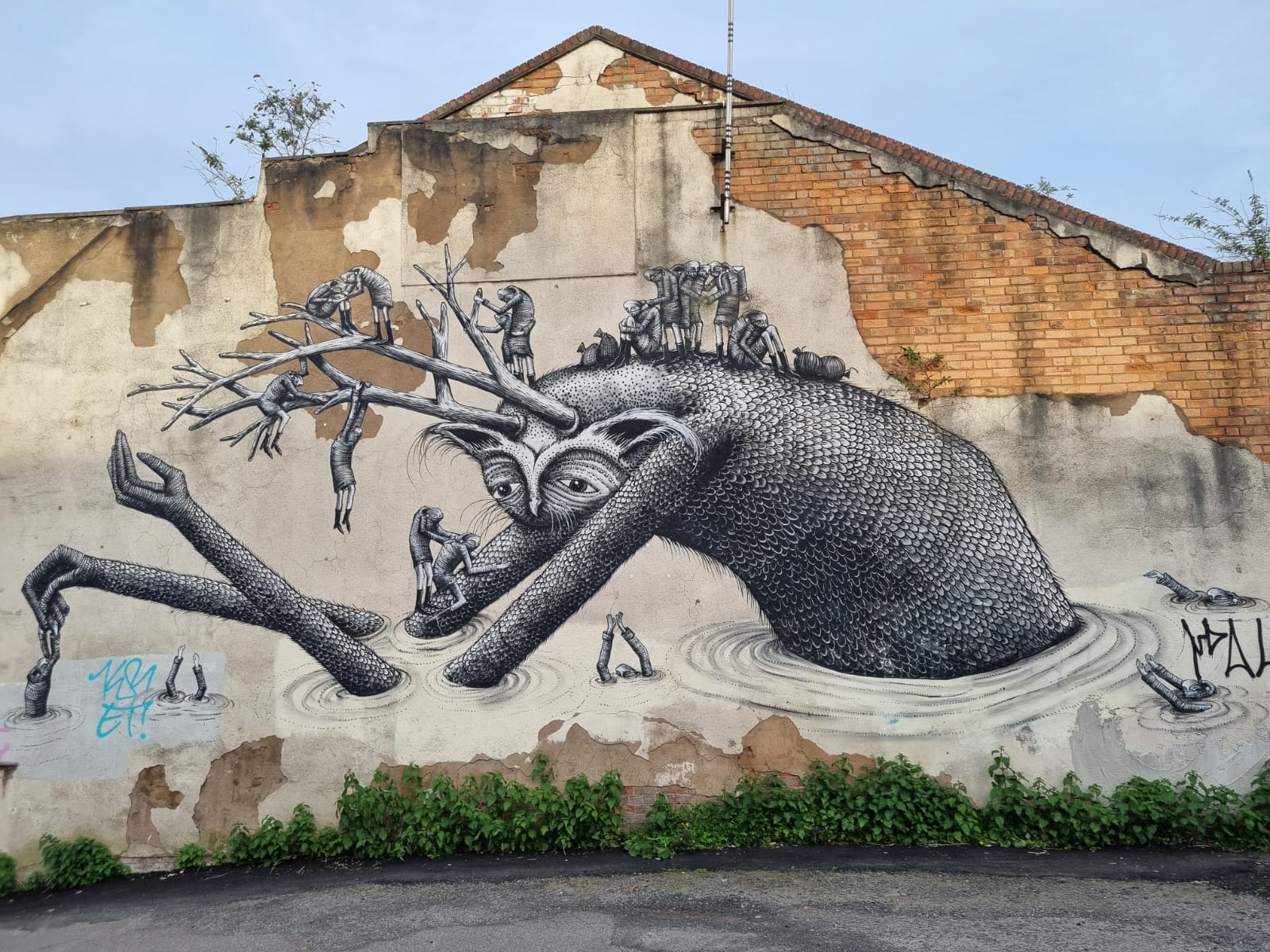
Since we moved to the Warehouse, the BSFG have brought numerous science fiction writers and others to Digbeth: from Peter F Hamilton to Alastair Reynolds, Claire North to Wendy and Tim Aldiss talking about our former Honorary President, Brian Aldiss. We have discussed everything from terraforming to the future for human lifespans to the history of Dungeons and Dragons. Celebrating our 55th anniversary this year, we had hoped to remain within the Digbeth community for many years to come, where even the graffiti makes us feel at home:
We understand that the Kilder bar under the arches at Shaw’s Passage is also under threat from these plans. This has been where we have taken our guests ever since we arrived in Digbeth, so has already become part of the SF legacy of the city.
There are obviously many more important groups than us depending upon the Warehouse’s continued existence – it currently houses the BRIG cafe (Birmingham Race Impact Group), Voce Books, Sprocket Cycles, Vivid Projects, BrumRadio and Digbeth Community Garden – but it is important to us. We will be responding to the consultation and hope that as many other people who care about this local resource do so too. It feels appropriate to leave the last words to Douglas Adams:
Many, many light years from here, indeed from anywhere, lies the grim and long abandoned planet, Vogsphere. Somewhere on a fetid, fog-bound mud bank on this planet there stands, surrounded by the dirty, broken and empty carapaces of the last few jeweled scuttling crabs, a small stone monument which marks the place, where it is thought, the species Vogon Vogonblurtus first arose. On the monument there is carved an arrow which points away into the fog, under which are inscribed in plain, simple letters the words “The buck stops there.”
In October 2009, while working as a pensions actuary in Birmingham, I attended the Institute and Faculty of Actuaries’ Joining Forces in Mortality and Longevity multidisciplinary conference at the Royal College of Physicians in Edinburgh. The canapés were excellent and, of the plenary speakers, I particularly remember Rudi Westendorp from Leiden University who, in response to the question of whether it was nature or nurture that was responsible for longevity, said it was both.
It was also the first and last time I have used a sleeper train. I had a trustee meeting on the Friday morning south of London and decided that it would be a good idea to get the sleeper from Edinburgh to London on the Thursday night. I hadn’t really researched it in advance and I suppose I was expecting a cabin to myself, but it turned out I was in fact sharing with a German guy who looked like he rode the overnight trains of Europe all the time. There was a set of bunk beds which took up most of the cabin and my memories of that night were of my being thrown around every time the train took a bend down the East Coast mainline, not sleeping a wink while my room-mate snored soundly throughout and then of his taking an annoying amount of time to brush his teeth in the morning. The trustees did not get me at my best.
But I digress. The session from the conference which has stayed with me ever since was by Eugene Milne from Newcastle University. As the blurb for his session A new model of mortality and survival stated:
A new mathematical model mimics patterns of mortality in species from nematodes to humans. Net risk, it suggests, arises from two components, an interactive element accounting for historical falls in human mortality, and redundant decay which shapes lifelong risk. This suggests “intrinsic ageing” is unrelated to the slope of the mortality curve, and is unlikely to have altered for humans in recent centuries.
Eugene Milne went on to become Director of Public Health for Newcastle and took them through the pandemic. The full paper in the British Actuarial Journal from 2009 is here.
At a time where actuarial mortality modelling consisted either of projecting observed trends into the future (with no real explanatory power for observed features like cohort effects) or attempted to project a range of causes of mortality based on the likely progress in treating them (which is limited by the quality of information on death certificates), Milne’s model stood out for starting from a biological model of gradually diminishing redundancy within the body. He recognised its limitations, as he said at the time:
As a bridge between actuarial and biological approaches to ageing it falls, as yet, between two stools. The examples in this paper are generated by probabilistic computer modelling. This is clearly not adequate for actuarial use and the model needs to be developed further to provide a form that will serve that purpose. On the other hand, it describes (as noted in section 4) a biology that would be ‘needed’ in order to construct organismal risk as it is observed. This it does well, providing a coherent account of why mortality patterns appear as they do. Yet its theoretical ‘biology’ is at odds with currently favoured theories of ageing. If the biological quantity described in the NBM [nested binomial model] as redundancy exists, we do not yet know what it is, nor why it should appear to act in so sequestered and consistent a fashion.
But the idea stayed with me, and perhaps that made me particularly receptive to Richard Murphy’s recent article about allostatis, which he describes as “the way living organisms survive by continually adapting to the changing world around them”. As Murphy points out:
If something breaks, a wealthy person can simply have it repaired or replaced. If travel arrangements fail, alternatives can be found. If income is interrupted, there are savings to draw upon. Problems remain, because they always will, but they rarely threaten the stability of everyday life for a wealthy person. In other words, the amount of adaptation required of them is reduced.
There have been a number of attempts over the years to draw attention to how your level of income affects your ability to adapt to your environment.
For, when you are approaching poverty, you make one discovery which outweighs some of the others. You discover boredom and mean complications and the beginnings of hunger, but you also discover the great redeeming feature of poverty: the fact that it annihilates the future.
However Orwell has been criticised, as the temporary tramp that he was, for deciding that meant the end of anxiety. More recently, Jack Monroe used Terry Pratchett’s example of Captain Vimes’ boots, to illustrate how what life costs depended on how much you already had:
A really good pair of leather boots, the sort that would last years and years, cost fifty dollars. This was beyond his pocket and the most he could hope for was an affordable pair of boots costing ten dollars, which might with luck last a year or so before he would need to resort to makeshift cardboard insoles so as to prolong the moment of shelling out another ten dollars.
Therefore over a period of ten years, he might have paid out a hundred dollars on boots, twice as much as the man who could afford fifty dollars up front ten years before. And he would still have wet feet.
But to return to the idea of redundancy: it is clear that if you have, say, redundant money which can be brought in to play when things go wrong, then things generally go much better for you. But imagine if you have used up any redundancy quite some time ago and therefore any reverse is a potential crisis. Your stress levels will be much higher all of the time, as your body tenses for the battles it knows lie ahead about anything from a car that won’t start to a boiler that packs up to a hike in the price of bus fares or the basic food products on the Vimes Boots Index. Day in, day out.
At the moment one of the differentials in redundancy is around heat stress. Housing which cannot be cooled without electricity which cannot be afforded. Day in, day out, for much of the summer so far. But in winter the same housing will need far more heating because its occupants cannot afford capital investment like insulation.
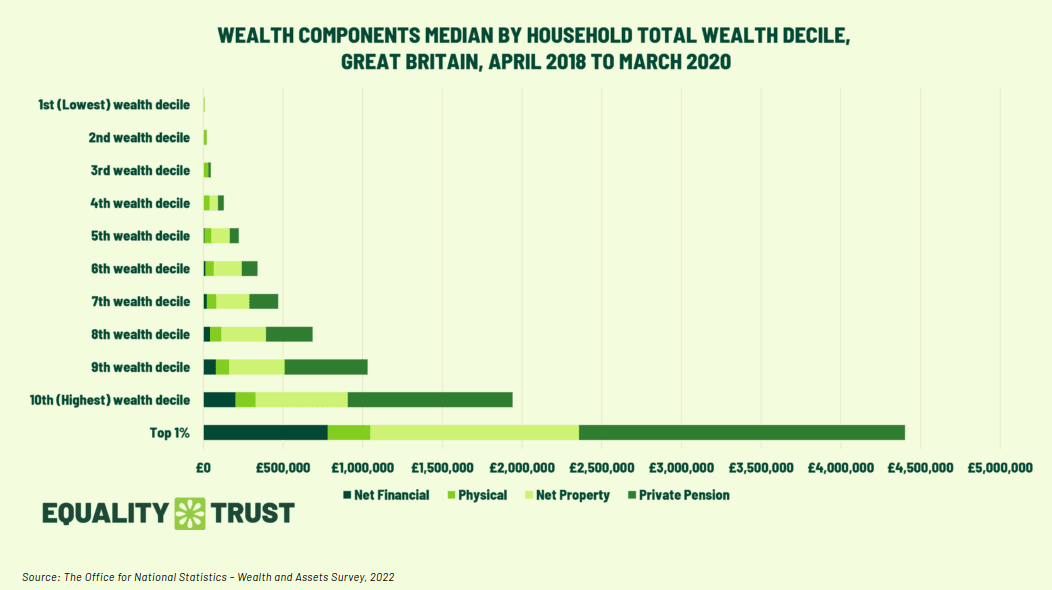
And the reason for this enormous inequality in the level of redundancy, is of course wealth and income inequality. The Equality Trust sets out the statistics as follows:
The UK has very high inequality of income compared to other developed countries; the 9th most unequal incomes of 38 OECD countries (OECD, 2022).
The UK’s wealth inequality is much more severe than income inequality, with the top fifth taking 36% of the country’s income and 63% of the country’s wealth, while the bottom fifth have only 8% of the income and only 0.5% of the wealth according to the Office for National Statistics.
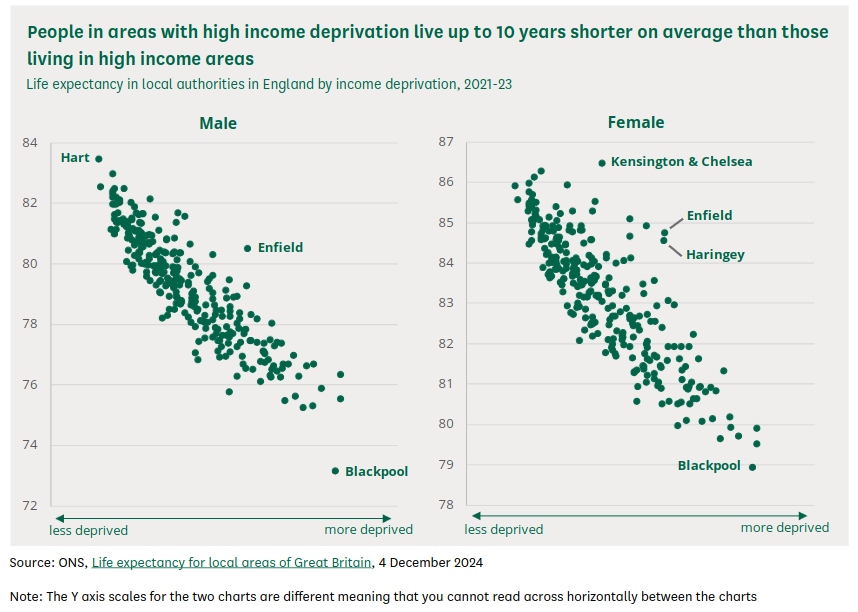
And this stress, day in, day out, means that people also die earlier, as shown below in the House of Commons Library research briefing on Inequalities in life expectancy, using ONS figures (and honestly they’re not picking on Blackpool):
And yet the most likely way for you to hear the word redundancy is when some company is planning to get rid of some of its workforce.
The trouble with people is that you don’t need them until you do, as Jonn Elledge has written here:
There are substantial differences between the US military and the NHS: but what both have in common is that, when they need something, they really do need it. The entire notion of “efficiency” is misplaced.
Similarly, in Nate Hagens’ latest interview, with biologist and biophysicist Olivier Hamant, they explore:
…how cheap, abundant energy allowed human societies to substitute the “safety net” of resource abundance for the safety net that living systems actually rely on: diversity, redundancy, and cooperation.
Until the resources stopped being so abundant.
And then there is the kind of workplace sustained redundancy programmes create, as Seth Godin says in a recent blog post:
“How few people can we get away with?” That’s a question many bosses think hard about. Automate. Streamline. Improve productivity and take humans out of as many tasks as possible. It’s a time-tested way to create profits and to increase a certain kind of reliability. Claude Code is popular with many organizations for precisely this reason.
“How can we include more people into this process?” is a less popular but often more valid way to create value. In an organization that is in the business of bringing insights, humanity and care to problems, more involvement from people creates better outcomes. The challenges make it far more valuable.
Which sort of organization would you like to work for?
And what sort of society do we want to have? One that supports the people in the bottom quintile with no redundant capital, so that they might have the resources available to maintain the stability of everyday life and reduce the adaptation required of them? Or one which keeps demanding more and more from those it allocates less and less of national wealth to. To quote from another Orwell book, Nineteen Eighty-Four, from the mouth of O’Brien, Big Brother’s Grand Inquisitor:
If you want a picture of the future, imagine a boot stamping on a human face—for ever.
I think we can all come up with better pictures of the future than that one.