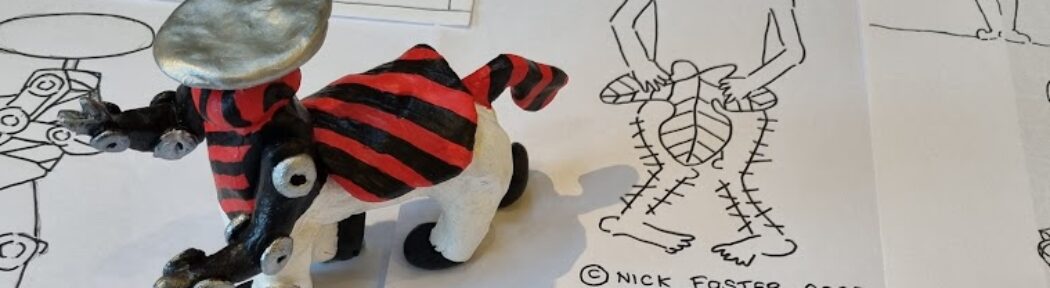

As I discussed in How Not To Be A Reverse-Centaur (Cory Doctorow defines a reverse-centaur as “a machine that is assisted by a human being, who is expected to work at the machine’s pace”) our actuarial education system needs to change. This has been true for some time, but the development of AI systems has both demonstrated why more clearly and accelerated the timeframes over which action is needed. As I said in December last year:
A large part of the education of the future will need to be about equipping us all to understand what we now have access to and when and how to access it. We will all have different things we are interested in, or end up involved with and needing to be educated about. It will be up to each of us to decide which things are worth the difficulty of learning, but to make those decisions we will need education that can support the development of judgement.
For education institutions, the question will be what is not worth the difficulty of learning? Credentialising based on now relatively meaningless assessment methods will not cut it. This is where the confrontation with employers and politicians is likely to come. Essential skills and their related knowledge will be better developed and assessed via more open-ended project work and online assessment of it to check understanding. These will need to become the norm, with written examinations becoming less and less prevalent. Not because of fear of cheating and plagiarism, but because an outcome which can be replicated that easily by AI is not worth assessing in the first place.
Suppose you were to ask someone who had never seen our academic system that, in order to assess whether someone else we wanted them to employ in their organisation would do a good job for them, we would:
- Award marks for what has been written in answer to academic questions about what the students can remember unaided about the content of their lecture courses and reading lists with a biro on a pad of paper perched precariously on a tiny wooden table surrounded by hundreds of other similar scribblers, for a set period of time as minders wandered the floors like Victorian factory owners.
- These marks would be based on marking criteria they would never see.
- We would then get together in a secret huddle for a couple of months to mark all these scripts, check them and “moderate” them to check they were in line with the previous years’ exercises.
- Then out would come the answer (like the Answer of 42 to the Ultimate Question of Life, the Universe and Everything in Douglas Adams’ The Hitchhikers Guide To The Galaxy).
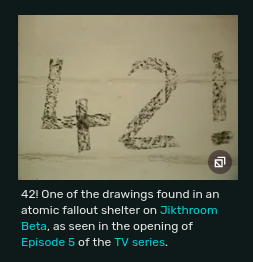
Source: https://hitchhikers.fandom.com/wiki/42
Imagine another world where the kinds of things employers routinely do when trying to decide whether to take on someone as a new member of their organisation are routinely part of their assessments at university, eg:
- Watch them operating in groups working on a task.
- Ask them to describe how they would go about tackling a particular problem.
- Get them to show they understand the implications of a piece of work they have carried out and can explain what assumptions it is based on and can justify them.
With assessments of performance which are not opaque academic exercises but descriptions of performance made as the tasks are being carried out evidenced by video if necessary. In other words, transparent enough to whoever might want to work with these students next to eliminate the gap between their credentials and and their actual actionable skills, knowledge and experience.
Assessing in this way will be highly demanding, for both the students and the assessors, but it means the final assessment is done with the student present and, with careful probing from the assessors, who will obviously need to have done a close reading of the project work beforehand, confidence will be high about the abilities demonstrated by the process. And it removes the need for all the time currently spent on the Victorian factory owner process – imagine what could be done if the whole of May, June and July wasn’t spent marking scripts!
A move like this will significantly change what is taught. There will be no point presenting lots of information in ways which make retention easier for students (the so-called bookwork” questions currently in most exams). This makes sense when you think about how much of the content of your courses is accessible to you now, even on a vocational course like actuarial science, as opposed to skills developed. Instead the focus will be more on conversations with students for the purpose of developing their understanding of a meaty topic and the problems to be solved within it. Explorations of these will form the projects students will be spending most of their time working on. Checking understanding and making sure students are working within frameworks they understand and can talk about will be the main teaching activity, with opportunities to practise these throughout the year. In other words, showing the ability to apply what they have understood and demonstrate the ability to reflect, make judgements and show higher levels of understanding as a result. An ability they can then apply to new problems and situations.
And notice something else about how these alternative credentials are generated? They are all social activities: from operating in groups, to presenting a piece of work to a group of assessors. Even the project work is developed through group sessions alongside individual work. If you want to develop people who can spot the gaps between models and reality you need to do it in groups, where people can test their perspectives against each other.
Compare this to the current solitary exam preparation, peppered with “revision” lectures, exam sitting and exam marking processes which comprise the predominant activities in universities between March and July each year. We are currently being funneled into an ever more solitary professional practice around LLMs. It has become quite accepted for people to do all of their thinking on a subject closeted with perhaps one, two or three LLMs but no other people and then share their analysis with an expectation that other people should read the output. Developing the skills to do these analyses will obviously be necessary, but they will never be the most important skills people learn.
Treating each other like walking databases is never going to make you new friends or influence people. However the skills you develop via an alternative more social education will.
There are examples of this approach already happening, with employers involved in the design of assessments in some cases and universities using the flexibility they have to restructure and redesign courses. But the dominant assessment system of formal exams is keeping much of this activity at the margins at the moment.
If it were to become the dominant assessment, it would also mean that larger areas of the curriculum could be examined, as the focus would not be on retention of large bodies of content but the ability to use the content to solve problems. So, perhaps, after a first year levelling up students’ ability and experience of mathematics and statistics, year 2 would have an actuarial statistics module (currently CS1/CS2) and an actuarial mathematics module (currently CM1/CM2), both dissertation based and vivaed. Then in the third year they would tackle an economics module and a business modules (currently CB1 and CB3). Perhaps in the final year of a four year MAct they would tackle a modelling and communication module (CP2/CP3) and either CP1 actuarial practice module would be offered or a professional skills module.
This would be more of a driving test style of assessment, with students working with supervisors on the comments from assessors on the original dissertations and presentations until they were up to the required standard. Students unable to make the standard after an additional year would be offered a move to a non-accredited course. The current funding model for higher education will need to change: loading students with £10,000 more debt every time they add to the nation’s skills bank with another year wrestling with these difficult skills to master was never a clever strategy, but this structure would make it even clearer how self defeating it is. If economists are accepting that the labour market no longer allocates resources effectively and are considering either a universal basic income or universal basic services, then logically university funding should follow suit.
The implications for the actuarial profession will be even more challenging. I question whether the Institute and Faculty of Actuaries will continue to consider it worth the effort and expense of reconfiguring their entire approach to exam setting, syllabus maintenance, marking, online proctoring, etc for subjects routinely taught throughout the university system for a a variety of purposes, ie the current core principles subjects of mathematics, statistics and business studies.
Whether they retain their own capacity to assess the core practice subjects is a more open question (CP1 Actuarial Practice, I imagine, will be seen as sufficiently specialist to keep in house, with perhaps a few universities, as now, accredited to run courses which can earn this qualification, however CP2 Modelling and CP3 Communications are not nearly as specialised now as they seemed when they were first introduced). I would also move the new core economics module recommended by the IFoA Economics Review Group I chaired in 2022 to replace the current CB2 module into the core practice section, as it would be more of a critical thinking module about the economic ideas necessary to underpin good actuarial work than the technical how-to subjects in core principles.
The specialist stage of the SP and SA subjects and the whole continuing education and additional certification options I would confidently expect the profession to retain, review and adapt as needed to reflect new challenges in members’ working lives. However, if CP1 is all that is needed post graduation to get to Chartered Actuary and CP1, two SP subjects and a SA subject gets you to Fellow, then suddenly time to qualification becomes much more predictable for students and their employers alike.
The risks to employers of taking on students would therefore be reduced, but also the rewards to taking them on will be much more transparent. The students we will be developing will have collapsed the gap between their credentials and their actual actionable skills, knowledge and experience. They will have:
- Great team working skills;
- Very highly developed presentation skills, both in writing and speech;
- Strong IT skills and comfort working with data; and
- Clarity about why they are in an organisation and a drive to use their skills to solve problems.
They will also have developed the four capabilities set out in Carlo Iacono’s Teach Judgement, Not Prompts:
- Epistemic rigour. They will be more likely to spot when a system or model is over-confident given the evidence, after an intense experience of interrogating models and evaluating evidence in their courses.
- Synthesis. They will be able to integrate different perspectives into an overall understanding, through dissertation development, defending a position, understanding weaknesses in a position and adjusting accordingly.
- Judgement. They will have been asked to make many judgements in their work and had to defend them in discussions with their supervisors and fellow students. Unconvincing opinions, not backed by evidence, will not pass muster.
- Cognitive sovereignty. Students will have to take their own stand on their work, after all of the challenge and argument. Independence of thought is the hard-earned outcome here.
And then they will have a fighting chance of being centaurs in the world awaiting them, masters of the technology and opportunities available, rather than the reverse-centaurs that our education system is currently, and inadvertently, preparing them to be.