
I think I may have been naive.
A couple of weeks ago I took the IFoA’s AI Manifesto to task for wanting to be on the Red Team rather than the Blue Team, ie the one supposed to be stopping as many AI errors as possible. As I said then:
The Red Team breaks into systems by exploiting a single vulnerability. That is comparatively easy. The Blue Team needs to reassure its clients that it has removed ALL vulnerabilities.
But what if you are not working to protect people from vulnerabilities? What if you are working to protect and accumulate capital instead?
Today I was alerted to the latest article from the IFoA GenAI Working Party, Agent Skills in the Enterprise: Making Actuarial Process Knowledge Reusable. It explains “how an agent skill package can connect reusable instructions with scripts, controlled references, templates, examples and tests”. This will allow organisations to “preserve not only completed models, reports and workpapers, but also the process checks, review decisions and handling of exceptions that produced them using the “agent skill” framework”. As the report puts it:
The problem is not simply that organisations need better prompts. They are preserving the outputs of professional work while leaving much of the procedure that produced them implicit. A completed report records what was concluded. It rarely records every data check, exception, escalation point and review decision needed to reach the conclusion reliably next time.
I can immediately see the motivation. I have been that person trying to replicate a previous valuation result produced by a former colleague I can’t contact, with incomplete data and a-no-longer-supported valuation system which keeps going on the blink. But it was the mention of process knowledge which caught my attention.
I wrote about process knowledge and its importance around a year ago, citing the example of the shrines at Ise Jingu in Japan (which I had learned about from Dan Wang’s Breakneck). This is a now over 1,300 year project to preserve the traditional techniques of building these shrines which involve no nails, just dowels and wood joints. Skills are passed from one generation to the next, there is a tree planting programme which has survived a dozen or more historical eras, pandemics, volcanic eruptions, earthquakes, invasions and oh so many wars over that period. As well as two nuclear bombs.
The important thing is not the ability to build a shrine over 1,300 years later exactly as it was built then of course. It is a proof of concept. It has preserved intricate difficult skills over more than a millenium. And it has involved people, lots and lots of people.
By contrast, the IFoA project has a different, rather shorter term, goal, which is laid out as follows:
This is the first of five articles. The second examines how completed work can become reusable packages. The third introduces SkillOps as the discipline for governing agent skill packages in actuarial work. The fourth considers the consequences for consulting when expertise previously carried through human capital is codified in reusable agent skill packages and becomes intellectual property. The fifth places skills within the wider challenge of continual learning.
It is the fourth article which really bothers me. Once not just the details of a project, but all of the other parts which do not normally get passed on (ie the process knowledge) are captured in this system, it becomes intellectual property, which Cory Doctorow defines as:
any rule, law or policy that allows a company to exert control over its critics, competitors or customers
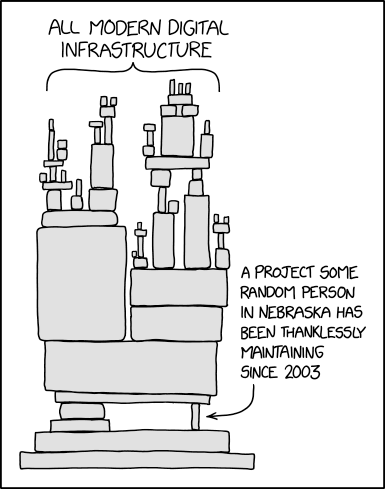
Up until now, process knowledge has not been given much attention, mainly because it can’t be turned into intellectual property. Process knowledge has always been what remains in the heads of the skilled technicians employed by businesses after everything not nailed down which can be taken ownership of by those businesses has been. Process knowledge has always been the nailed down part. It is the part that has allowed the last vestiges of worker power within most corporations to survive.
Now a group of actuaries think they have come up with a plan to monetize that for the firm as well. To pull up those last remaining nails of worker power.
Think how the IFoA GenAI Working Party would have approached the Ise Jingu shrines.
First you outsource the tree planting programme to a specialist forestry manager. Minimum tender of course: need to get maximum value for money here. Don’t worry about having control over the delivery of timber of just the right type in just the right condition for a unique project. Just leave that to the specialists working on a budget.
Then you sit with the old guys taking you through the various processes involved. Might need some video capture for some of it. Make sure everything they say is captured and then cross-referenced for easier access subsequently. Don’t take too long over it as time is money. Don’t actually feel what it’s like to work with the tools, just note down everything about tool selection. Don’t actually apply the required pressure in the right direction with respect to the grain of the wood, its dryness, the precise cut from the trees selected. Just make sure the video is high enough quality.
I would be surprised if this project survived 20 years. In fact, in view of the fantasy economics of the AI industry, I would be surprised if it lasted even five years if the AI Agents involved in this project relied to any degree on the survival of any of the Magnificent 7.
And this is just to build a shrine out of wood.
These two projects are doing two different things. One is trying to preserve a human activity over a non-trivial period of time. The other is attempting to monetize it so that it can be included in the bottom line for the next quarter. And perhaps to float the idea that your business might be able to dispense with those pesky new employees acquiring process knowledge.
Which brings me to another alarm call. This time from an anonymous group of senior professionals in the UK and European insurance and reinsurance industries called Sounding the Alarm and published in English, French and German. It is not long, so I urge you to read it, but I want to focus on this passage about how the insurance industry is responding to the climate crisis:
Our industry’s strategy is to manage renewals in order to limit our exposure as the physical risk manifests so that premiums are sufficient to cover the rising claims load. This is not a malicious act but a simple response to the commercial realities we are faced with.
We will do this in three ways which many clients are unaware of and governments across Europe are failing to internalise the consequences of:
Firstly, we will reprice our cover. We will simply make policies much more expensive to reflect this elevated physical risk and uncertainty. This will have wider consequences for economic inequality, making it harder for less affluent households to access insurance. It will also increase costs for critical industries such as farming or shipping , creating a significant social and financial burden for government s and, in turn, its taxpayers.
Secondly, we will limit coverage to exclude elevated risks such as wildfires as well as other less predictable risks . The nature of insurance being re – negotiated on a 12 – month basis allows us to do this without friction. Ensuring customers really understand that this is happening is critical.
Thirdly, if there is no way to bring premiums and claims into balance or introduce risk reduction measures we will – for certain geographies and sectors – simply withdraw coverage . This will particularly affect coastal, mountain and flood-prone communities.
This approach is our way of managing our own financial exposure and maintaining profitability at a time of increasing physical risk and increasing uncertainty. Doing so is critical to ensure we can continue to pay claims, therefore fulfilling both our fiduciary duty and our role in society.
This is the flipside of the capitalisation of process knowledge of course. If it can no longer be monetized then ditch it, all the while spouting about “our role in society”. The people on the receiving end will not care whether it is a malicious act or not, it will feel like one.
Both of these stories tell us which side many actuaries are on, and it is the side of capital rather than the side of the people from who it has been extracted. It is not malicious, and it is how many actuaries understand fiduciary duty. To the contract rather than to public interest.
I look back on my own actuarial career. Some time as a scheme actuary where I really felt I was safeguarding the pensions of ordinary people, some time protecting the wealth of already fairly wealthy people from the tax authorities, some time in insurance feeling really quite remote from customers of any kind. And then 10 years helping students into actuarial work. Have I really just been a tool of capital this whole time? Is this why a IFoA sustainability WhatsApp group, which is all about connecting sustainability thought leaders together and raising awareness of the impact of the climate emergency across the finance sector (where I first saw the Sounding the Alarm memo), is so small?
Dan Davies, highlighting Robin Wriggleworth’s new book, A Fabulous Debt: The Epic Story of How Bonds Built the Modern World, wonders whether life insurance actuaries and general insurance actuaries (referred to as casualty actuaries here) have a similar relationship as bond traders and equity traders. It’s a good read. There is even a reference to Craig Turnbull’s magisterial A History of British Actuarial Thought! And this is the conclusion:
Which leads me to the paradox of the title. Reading the histories of actuaries, there seems to be quite a similar needle between the life and non-life insurers; one group place their trust in the higher mathematics, the other deals with heuristics, rules of thumb and vibes. It all comes to a head when you have to draw up the accounts, of course – the big intellectual battle seems to have been the casualty actuaries’ practice of setting reserves depending on the sum of each individual policy, which is really contrary to the spirit of treating risks as draws from a single distribution.
So it makes me think that there is some potential general principle here. Fields of human endeavour where management makes most use of complicated mathematics are likely to be less intrinsically complex and difficult. We use quantitative techniques only when we are content with regarding something as quantifiable.
This feels like a possible explanation. If your acknowledged expertise is in clever mathematics, you are likely to favour techniques which make more things quantifiable and therefore manipulable with clever mathematics. And the more actuaries flood into new fields, the further the quantifying will go.
Capitalism has always been in the business of quantifying things, allocating them to someone (often using considerable violence to do so) and then selling them as property. But late-stage capitalism has a now almost cartoonish obsession with quantifying even things that cannot be easily or successfully quantified, extracting ownership of the thing at the point of quantifying it and then selling it on.
When all the process knowledge has been turned into intellectual property, proprietary knowledge behind paywalls that hide the fact that it doesn’t really work any more, businesses will start to realise that they still have important gaps that are now nearly impossible to fill. There may be a Sounding the Alarm memo about it from anonymous insiders.
But it will be too late by then.