
Sometimes an idea comes along that seems so obviously good that you wonder why it hasn’t been done a long time ago.

The Institute and Faculty of Actuaries (IFoA) are currently consulting on just such an idea in my view: the Chartered Actuary (CAct). Currently someone is a qualified actuary when they get to the associate level, however you wouldn’t know it. There are very few qualified roles available for associates and most firms assume hardly anyone will stay at that point but instead continue to fellowship. Indeed many actuaries leave the CA3 subject (soon to become CP3 under Curriculum 2019) in Communications until last currently, and therefore qualify at both levels simultaneously.

This will happen no more. CAct will be a distinct qualification, and a required qualification point for all student actuaries to reach before going any further. It will be globally recognised as the generalist actuarial qualification from the IFoA, as well as also possibly the final purely actuarial stage of an actuary’s qualification journey in future. The specialisation in actuarial subjects, via the specialist principles and specialist advanced modules, will still be taken by many, particularly those aiming for practising certificates, but there will be time and space for other specialisations: in data science, business management and many other areas. The hope (and I think this is a realistic hope) is that this will massively expand the range of areas where actuaries will be able to make a difference in the future.

Why do we need to? Well, as Derek Cribb, the IFoA’s Chief Executive wrote in the December issue of The Actuary:

Globally, there are around 70,000 qualified actuaries, but more than five million qualified accountants and a similar number of lawyers…Why is this relevant? Bluntly, numbers matter. Whether we are concerned about operational economies of scale, and the consequent impact on membership costs, or whether it’s about building external awareness of the value the profession brings, there is strength in numbers. 

Now of course it can be argued that this is what every corporate leader always wants, and that some not-for-profit organisations could usefully benefit from considering alternative structures (particularly relevant currently in the university sector which I inhabit), but in this case, when our regulatory body the Financial Reporting Council is primarily concerned with another, much larger, profession, the existential threat is real. If you believe as I do that actuaries have a unique skill set, which is likely to be lost to a wide range of businesses and other sectors if it is unable to meet the demand for those skills due to a simple lack of numbers, then the need to take any perceived barrier to practise away from our emerging young professionals is clear.

Whatever your views on this idea, please respond to the consultation, which is open until Wednesday (28 February) and can be found here. I have found widespread support amongst the students I speak to as an actuary working in higher education, both in the UK and also notably in my discussions with Mumbai students earlier this month. I feel it is our responsibility as Fellows not to stand in their way as we in turn hand them the responsibility of taking our profession into a new generation.

The future may be highly uncertain, but I am very confident that this is a good idea.


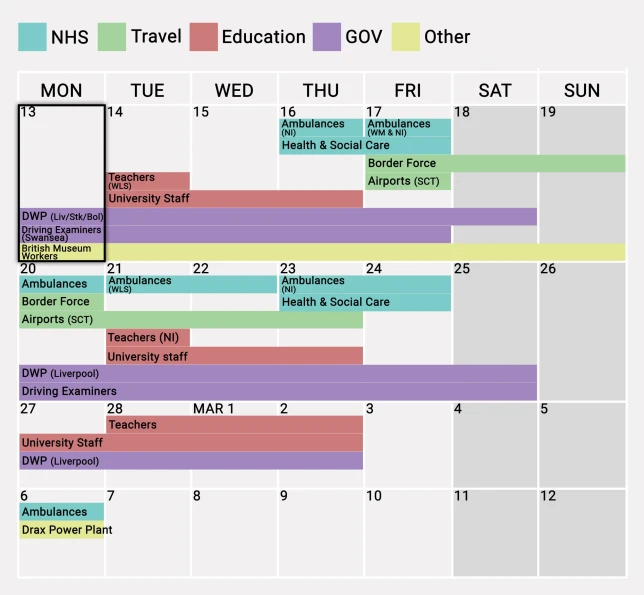
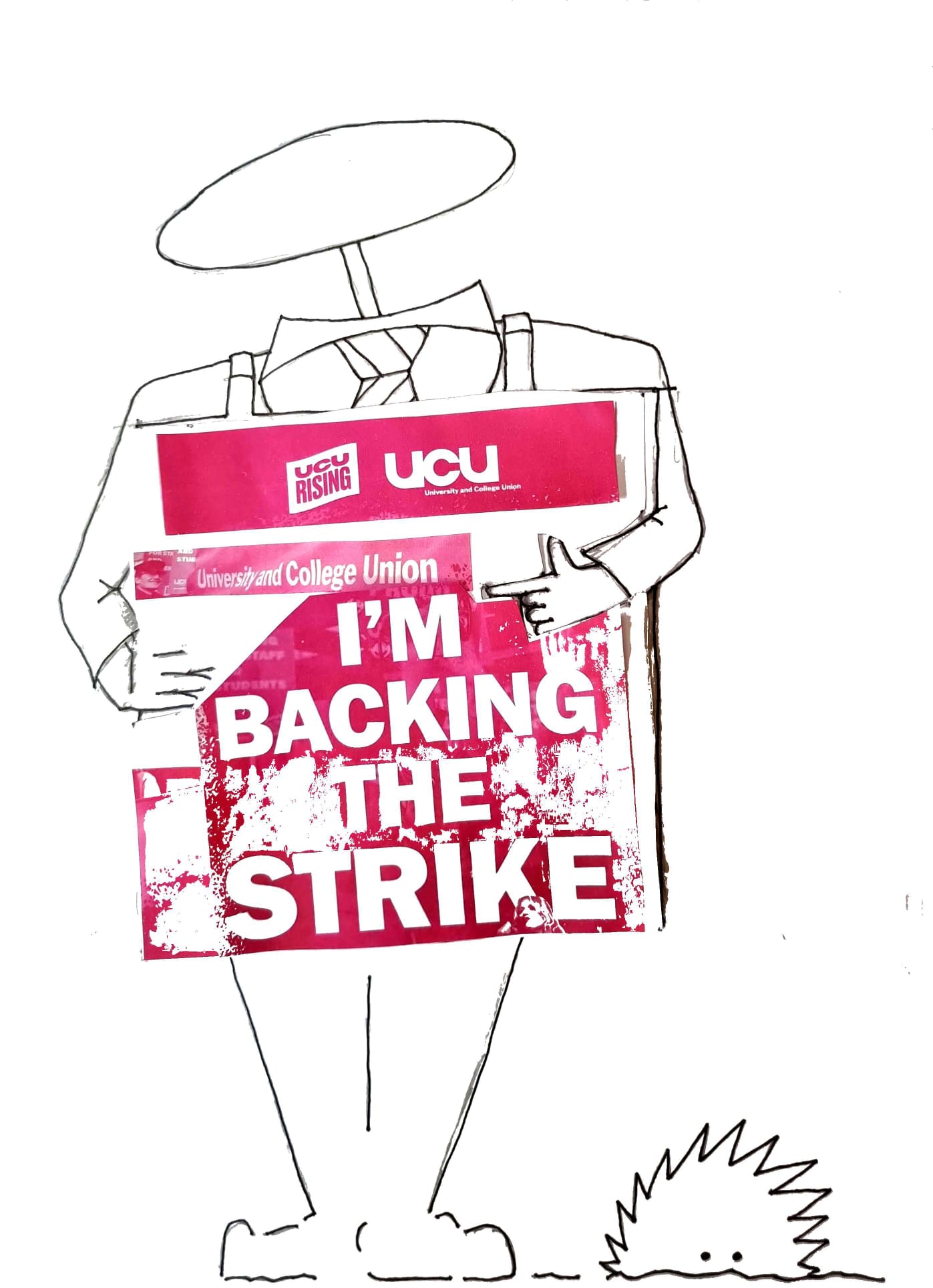
This is a piece largely written as a rebuttal to Waseem Yaqoob’s recent article on the LRB blog, entitled Why We Strike. Let me start by clearly stating that I support the University and College Union’s (UCU’s) right to strike from Thursday, and think it is ludicrous that 7 of the 68 ‘pre-92’ universities’ UCU groups need to reballot their members before they are allowed to carry out what is clearly the majority view of their members. I just think they are wrong this time.

The Joint Negotiating Committee (JNC – apologies there are lots of acronyms in this) of the Universities Superannuation Scheme (USS) is the body tasked with negotiating the pension deal struck every 3 years. It has equal numbers of members from Universities UK (UUK – representing the employers (over 390 of them)) and the UCU, with an independent chair who gets to cast the deciding vote on matters when the other JNC members are in deadlock. Just such a deadlock occurred over the future of the USS. The UCU representatives wanted to continue with some sort of defined benefit (DB) arrangement, where benefits are guaranteed, and the UUK representatives wanted to switch to defined contribution (DC), where contributions are instead paid into an invested fund for the member to secure benefits with as best they can at retirement. The chair went with the UUK position.

As a member of the USS as a result of working as a lecturer at the University of Leicester, I fervently hoped for a different outcome for purely selfish reasons. However I could not justify why I should have a DB pension (which I agree is a vastly superior option to the DC alternative being offered) when the vast majority of DB schemes are already closed, including let’s not forget the University of Leicester Pension and Assurance Scheme, which has been closed to new entrants since 2003 and to future accrual since 31 March 2016. Is it realistic or reasonable to assume that Grades 6 and above will continue to enjoy DB accrual indefinitely while Grades 5 and below don’t?

You will hear a lot about how something which is personally disadvantageous to one lecturer after another is therefore suddenly going to damage higher education irrevocably, depicting academic life as so uniquely risky that only the safety blanket of a DB pension will persuade people to do it. This is despite them not being seen as necessary in many other top global universities. For
example, the top universities in the United States mainly have DC pension schemes.

The rationale for the changes is not dubious. The vast majority of DB pension schemes follow the same funding approach as the one used by the USS which has revealed such large deficits, as was recently confirmed by research carried out by Punter Southall. Most research points to a gilts plus basis being the most appropriate for a scheme still open to future accrual.

Neither do I agree that the funding approach proposed is unduly prudent. The Government has produced a green paper, which was largely based on the report from the Commons Select Committee for Work and Pensions in December 2016, which was itself in response to what happened at Tata Steel and BHS in particular. The Select Committee report suggested legislation was needed to:

  • Agree changes to the indexation of pension benefits in instances where such changes are needed to make a scheme sustainable
  • Allow scheme members greater flexibility to take their pension as lump sums
  • Make recovery plans of more than 10 years exceptional (the USS currently have a recovery plan of 17 years, 14 of which are still outstanding – reducing this to 10 would considerably increase the contributions required into the scheme).

It did not focus on valuation methods particularly.

However the resultant green paper, which launched a consultation which ended in February 2017, considered 6 questions, the first of which was focused on whether current valuation measures were the right ones. Unfortunately the detailed discussion (eg in paragraph 213) was hardly encouraging to the view that the USS funding basis is too prudent and the contribution requirements too high, as it suggested that stricter interim funding targets be set for schemes which were severely underfunded and gave an example of what they meant by this as being less than 100% funded on the Pension Protection Fund (PPF) basis (this is the pensions lifeboat for schemes with insolvent employers – USS was 82% funded on the PPF basis at the last valuation).

One point where I am in agreement with Yaqoob is that the success of the strike will depend to a large extent on how students respond. I was amused by the admission that “Students have expressed solidarity with striking staff while at the same time demanding refunds for their disrupted education”. I believe that the solidarity with striking staff is due to misinformation, whereas the demand from students for refunds for their disrupted education are likely to be more long-lasting.

I have resigned my membership of the UCU as a result of this ill-conceived strike action. I urge other members who feel a similar discomfort about what they are being asked to do to consider whether they need to do the same.

This work is licensed under a Creative Commons Attribution-NonCommercial 2.5 License.
https://xkcd.com/927/

Actuaries who are members of the Institute and Faculty of Actuaries (IFoA) have a code. Yes, one or two clients might say, it is the language which they use to deliver all of their advice in. However, the Actuaries’ Code is supposed to set out what principles govern the way actuaries (and all other members of the IFoA) conduct themselves. Launched originally in 2009 with 5 key principles, it had a light touch review in 2013 before the current consultation on a more substantive review (including a new principle). Anyone who has a view about how actuaries should behave in future can take part in this consultation, which officially closes on 17 January (although I understand that responses will be accepted for a few days after this). You don’t need to answer all of the 48 questions, in fact you can just email individual comments to code@actuaries.org.uk if you prefer. I would urge anyone with an interest to do so.

Overall it is clearly a very considered piece of work, which has caused me to think more deeply about some elements of my professional practice. The Code itself is considerably clearer than it was, removing unnecessary detail, improving the visibility of other key regulatory requirements (eg continuing professional development (CPD) obligations and the disclosure requirements under the disciplinary scheme) and structured well with very short pithy principles supplemented by amplifications (and, if necessary, further explanations in an accompanying Guide). The Actuaries’ Code Guide is a completely new document designed to explain the Code in more detail. It is currently 48 pages long, which has caused some to feel that the advantages of having a Code short enough for everyone to read  may have been lost. Then again, moving the 22 pages of it which cover conflicts of interest to a separate document (which I understand is under consideration) would leave a fairly focused document. I think a Guide of some description is necessary, if only to bridge the gap between the Code and other regulations. I do however agree with those who have said the Guide should not be an IFoA document at all, to avoid any perception of a regulatory authority it does not seek.

So, all in all, a good attempt to join up the various regulations governing actuaries’ professional practice.

And yet…it may not be a light touch review, but it’s not exactly heavy touch either.

The first thing that concerns me is what is not here. Both the Code and the Guide appear to be almost entirely concerned with actuarial advice, when there is an increasingly significant body of work carried out by actuaries, particularly in non-traditional areas, which is not advice to clients at all. I work in education, where I am making judgements based at least in part on my actuarial training all the time, but I have to work quite hard to cudgel some of this wording into phrases relevant to me (I think my favourite line is Where Members identify that a user of their work has, or is reasonably likely to have, misunderstood or misinterpreted their advice, Members should draw their attention to any adverse impact, which describes an almost constant state of affairs within a university environment).

There is also nothing here about responding to the impact of automation on the profession. There are many concerns which flow from this, but consider one scenario: increasingly capable artificial intelligence systems, with access to far more data than any individual doctor could possibly take into consideration in making a diagnosis, will be able to offer advice and treatments to patients with better outcomes than even the top practitioners in a given field, and with far more reliable outcomes. According to Daniel Susskind, this is already starting to happen. However, as Cathy O’Neill points out, this increased reliability has immediate outcomes in a health insurance environment:

Just imagine, though, what insurance companies will do with the ability to better predict people’s health care costs. If the law allows, they will increase prices for the riskiest customers to the point where they can’t afford it and drop out, leaving lots of relatively healthy people paying more than they’re expected to cost. This is fine from the perspective of the insurer, but it defeats the risk-pooling purpose of insurance. And in a world of increasingly good predictive tools, it will get progressively worse.

If we do not have any principles in our Code which require us to take account of such considerations, and a direction of travel of increased privatisation of the NHS, what is to stop us actively conniving in such an outcome?

A principle like run your business or carry out your role in the business in a way that encourages equality of opportunity and respect for diversity would be one possibility (courtesy of the code of conduct from the Solicitors Regulation Authority). Another possible approach would be to require individual members to take account of the public interest, using the same professional judgement required to interpret the rest of the Code. It is therefore unfortunate that the IFoA should also have taken this opportunity to point out to members that they have no individual responsibility for such considerations. I strongly disagree with this, a move which was initially a response to the appeal against the ruling against the Phoenix Four. An appeal tribunal that overturned eight of the charges levied against Deloitte criticised the ICAEW for the lack of clarity in its guidance about how accountants should act in the public interest. It seems appalling to me that we would retreat from taking individual responsibility in this area altogether on the back of this.

But what about the new principle that has been added: Speaking Up? There has been some discussion about whether the requirement to speak up has been widened by the phrase Members should challenge others on their non-compliance with relevant legal, regulatory and professional requirements. I am not sure that this will lead to a large increase in whistleblowing in the profession, but I do think that the principle expresses expectations of members much more clearly now and this may have an impact on behaviour. What it doesn’t do is broaden the considerations under which speaking up can take place.

However I think the biggest weakness of the new Code, which undoes a lot of the clarity found elsewhere, may turn out to be the extensive use of just two words. “Appropriate” or “appropriately” turn up four times and the words “reasonable” or “reasonably” nine times. This suggests a shared view of the meaning of these words which I would question exists in a Code which “has no geographic restrictions and applies to Members in all locations and in relation to work carried out in respect of any part of the world”. The IFoA feels it knows what these words mean and doesn’t need to explain them. I think that individual professional judgement would be better applied to interpreting on a daily basis a clear description of what the IFoA means by appropriate and reasonable. That would certainly lead to a narrower range of outcomes, which ultimately has to be the point of any Code.

https://imgs.xkcd.com/comics/the_three_laws_of_robotics.png
This work is licensed under a Creative Commons Attribution-NonCommercial 2.5 License.

Daniel and Richard Susskind in their book “The Future of the Professions” set out two possible futures for the professions. Either:
• They carry on much as they have since the mid 19th century, but with the use of technology to streamline and optimise the way they work
• Increasingly capable machines will displace the work of current professionals

Their research suggests that, while these two futures will exist in parallel for some time, in the long run the second future will dominate. The actuarial profession is particularly vulnerable. As the Susskinds write:

Accountants and consultants, for example, are particularly effective at encroaching on the business of lawyers and actuaries.

Actuaries both here and in other countries are waking up to what is coming, but the response of the profession is a whole has been quite slow.

For the actuarial profession, we will see the extension of some trends which have already begun, eg:

  • Automation of processes not just leading to greater efficiencies but reconfiguring both what work is done and how it is done, eg propensity pricing and pensions valuations
  • Para professionalization, like CAA Global for instance
  • Globalisation
  • Specialisation
  • Mergers of businesses as markets consolidate
  • Flexible self employment

And the emergence of trends that have hardly started at all yet, eg:

  • The end of reserved roles for actuaries
  • Different ways of communicating advice (Richard Susskind got into trouble with the Law Society in the mid 1990s for suggesting that most legal communication between lawyers and their clients would be delivered via email in the future, which would strike us as an obvious observation now)
  • Online self-help for users of actuarial advice (ask discussed by the Pensions Policy Institute in their report last year)
  • The advance of roboactuaries and their assistants

Focusing on the last of these, a paper produced by Dodzi Attimu and Bryon Robidoux for the Society of Actuaries in July 2016 explored the theme of robo actuaries, by which they meant software that can perform the role of an actuary. They went on to elaborate as follows:

Though many actuaries would agree certain tasks can and should be automated, we are talking about more than that here. We mean a software system that can more or less autonomously perform the following activities: develop products, set assumptions, build models based on product and general risk specifications, develop and recommend investment and hedging strategies, generate memos to senior management, etc.

They then went on to define a robo actuarial analyst as:

A system that has limited cognitive abilities but can undertake specialized activities, e.g. perform the heavy lifting in model building (once the specification/configuration is created), perform portfolio optimization, generate reports including narratives (e.g. memos) based on data analysis, etc. When it comes to introducing AI to the actuarial profession, we believe the robo actuarial analyst would constitute the first wave and the robo actuary the second wave

They estimate that the first wave is 5 to 10 years away and the second 15 to 20 years away. We have been warned.

One of the implications of this would be far fewer actuarial students required and, in my view, a much smaller appetite amongst actuarial firms for employing students while they were sitting actuarial examinations, particularly the core rather than specialist ones. This in turn would suggest an expansion of the role of universities in supporting students through these stages of their actuarial education, massively increasing the IT and data analysis skills of the next generation of actuarial students and developing far more opportunities for students to develop skills more traditionally seen as “work-based”, such as presentation, project management and negotiation skills. Some universities, such as my own at the University of Leicester, are using the preparatory work in anticipation of the Institute and Faculty of Actuaries’ launch of Curriculum 2019 to do all of these things.

But universities and the education professionals in general face their own challenges from the rise of technology and increasingly capable machines:

  • The development of learning labs offering personalised learning systems
  • Online education networks, like Moodle, once used just to support traditional university teaching activities, but now starting to actively supplant them
  • Other online education platforms, like the Khan Academy
  • The rise of Massive Open Online Courses or MOOCs. For instance, more people have signed up to Harvard University’s MOOCs in one year than have enrolled at the University in its 377 year history

The actuarial profession and the higher education sector therefore need each other. We need to develop actuaries of the future coming into your firms to have:

  • great team working skills
  • highly developed presentation skills, both in writing and in speech
  • strong IT skills
  • clarity about why they are there and the desire to use their skills to solve problems

All within a system which is possible to regulate in a meaningful way. Developing such people for the actuarial profession will need to be a priority in the next few years.

Of course it is still possible to laugh at what Artificial Intelligence and Machine Learning (here and here) have not managed to do yet, despite their vast ambitions. But it should not blind us to the fact that those ambitions will be realised in our working lifetimes in many cases. And we need to start preparing now.


Group of pins

Two women were fighting on my train the other morning. It was a packed train, with people standing the length of the carriage, so I didn’t see it so much as hear it. The first woman felt she had been pushed by the other one and complained very loudly and with much swearing. The second woman made some comment about the first woman’s mother and it escalated from there, getting louder and louder. Neither was prepared to let the other have the last word and, seeing the impact the mother comment had had, the second woman used it again. At which point the first woman hit her. The other passengers had been sitting and standing grim-faced up until this point, but now one or two intervened. One, who had the bearing of a lay preacher, attempted to assume sufficient authority to stop the argument. He was ignored. Another one stood and put the second woman in his seat and stood between them.

The second woman continued to make comments, but as much to herself as to the first woman. She kept stamping her feet in frustration. She was clearly in unbearable discomfort, but not from any physical pain. Finally she called the police and, as we pulled into New Street Station, started to give a physical description of her assailant. “Everyone on the train saw it” she said several times, while the passengers around her stared in any direction but hers.

I don’t know what happened next in the lives of these two women, although an announcement was made a couple of days later on the same service that police were working their way through the train for witness statements about the incident. They never appeared in my carriage, and I am not sure what I would have said if they had. And I don’t know what your reaction to my story is – whether that the other passengers, including me, should have acted differently or some commentary on the behaviour of the two women. I am, however, reasonably confident that you will have a reaction, perhaps quite a strong one, despite my limitations as a narrator. The reason I am confident about this is that I found myself, involuntarily, completely absorbed in the dispute, upset when one of the women expressed upset, constructing back stories for each of them, questioning their strategic wisdom at various points and, by the time we arrived at New Street Station and I dispersed with all the other witnesses, emotionally drained. And a look at the faces around the carriage suggested to me that most of my fellow passengers reacted similarly.

Why am I telling you this? Because it is a clear example of our domesticated brains in action. The almost physical pain this argument caused me and most of my fellow passengers is the reason we can travel from Sutton Coldfield to Birmingham every day with rarely an incident. It is often referred to these days, in pejorative terms, as Group Think. The shared assumptions and behaviours which allow us to live alongside each other in peace. I then get on a second train each day from Birmingham to Leicester, which I tell everyone is a great train to work on. But this is only because I can trust the 80 or so other passengers not to start an argument. The police could not cope if everyone behaved like the two women in my story. When the police do make an appeal for witnesses, they do so secure in the knowledge that nothing they say or do will encourage more than a handful to come forward, so strong is our group instinct to stay out of each other’s lives if we can. It is not indifference but survival. You need very strong structures to counteract the very strong instinct for Group Think.

However the reason Group Think is used pejoratively is that we have had vivid demonstrations of its power to make large groups of people behave stupidly. For example, herding behaviour in financial markets often causing the very problems people are trying to protect themselves from by going with the crowd. Or regulatory regimes which seem to encourage monocultures to develop, whether in finance, health, education, politics or academia, based on shared assumptions rather than encouraging diversity, because monocultures are easier to regulate. Many professions, including the actuarial profession, have introduced specific professional guidance to encourage whistle-blowing where appropriate, ie standing up to the policies and practices of their own organisations in most cases, which often means doing battle with Group Think. How successful such initiatives prove to be remains to be seen.

Encouraging challenges to Group Think is hard. It normally means going out of your way to allow views to be expressed you don’t agree with. It makes getting your own way harder to achieve. It can seem to us like the opposite of strong leadership and decisiveness when we seek out opinions that will make decision-making more complex. But we have made our society so complex and organisationaly fragile that this is what we are going to need to do more of in the future to stop it all from crashing down around us.

Go on pick a card

Defined ambition has failed.

  • This was mainly because, tasked with suggesting a less onerous alternative to defined benefit (DB) schemes that gave more protection than defined contribution (DC) schemes, the pensions industry (including actuaries) did not get behind the least bad option, but instead presented a spectrum of options
  • The public and employers were unimpressed
  • And employers had enough on their plate anyway dealing with auto-enrolment
  • So they have now all (or nearly all) enrolled their employees into DC
  • And the reason they are in DC now is the same reason they were in DB before: because they were offered so many choices they lost sight of the fact that there was a choice.

DA options

The time to significantly influence corporate pension provision would appear to have passed until people realise how hard it is to make sufficient provision via a DC scheme. That may not be until the money actually runs out as the finance industry has a proven track record in keeping people in schemes (eg the early personal pensions and later endowment mortgages) long after they retain the capacity to do them any good.

In the meantime, people with DC pensions and madly transferring DB members now have freedom and choice. I predict that this too will fail.

  • This will mainly be because, tasked with providing cost-effective advice to people to empower them to make good decisions about their financial future, the pensions industry do not get their act together and just present a spectrum of options
  • The public will be unimpressed
  • And employers, who might have been persuaded to increase employee education and engagement in pensions, will have enough on their plate anyway dealing with auto-enrolment
  • So now most of them will be managing their own retirement with not enough money, vulnerable to pensions scammers and paying far more tax than they need to
  • And the reason they will not be in an annuity now is the same reason they were in one before: because they were offered so many choices (see the Pension Wise website, inexplicably still in an unfinished Beta state) they lost sight of the fact there was a choice.

Pension_Wise_Logo

The time to significantly influence individual pension provision appears to be rapidly running out.

How does this story end, I wonder?

There have been a lot of predictions already for 2015. The Chartered Institute for Personnel and Development predicts employment in the UK increasing by half a million, GDP growth of 2.4% and earnings growth of between 1% and 2%, ie keeping its predictions reasonably close to what happened in 2014 and/or what the OBR, OECD and IMF are predicting. The annual FT economists’ survey resulted in an average conclusion amongst 90 economists that GDP growth would increase from 2.4% pa to 2.5% pa around election time and then on to 2.6% pa soon after. I could go on but I think you get the general idea – small changes around current economic statistics with a remarkable level of agreement amongst the experts. It’s enough to make you want to use these predictions to populate your models with, which is of course the general idea.

But before you get any idea that these people know more about 2015 than you do, consider what was being said about the oil price only 6 months ago in the Office for Budget Responsibility’s Fiscal sustainability report. Here is the graph:

Oil predictions

Once again, there was a trend of projecting a price rather similar to the current one and a remarkable level of agreement amongst the experts. Here is what has actually happened subsequently:

Brent crude oil price

Now I don’t want to pick on these forecasters in particular, after all the futures prices indicated that these views were the overwhelming consensus. But the oil price is a fundamental indicator in most economic models – Gavyn Davies details how the latest fall in oil prices has changed his economic forecasts here – with implications for inflation and GDP growth, and dependent upon predictions about many other areas of the political economy of the world which impact supply (eg OPEC activity, war in oil-producing areas) and demand (eg global economic activity). So an ability to see a big move in oil prices coming would seem to be a clear prerequisite for being able to make accurate economic forecasts. It seems equally clear that that ability does not exist.

Economic forecasts generally tell us that things are not going to change very much, which is fine as long as things are not changing very much but catastrophic over the short periods when they are. Despite the sensitivity testing that goes on in the background, most economic and business decisions are taken on the basis that things are not going to change very much. This puts most business leaders in the individualist camp described here, ie a philosophical position which encourages risk taking. Indeed even if some of the people advising business leaders are in the hierarchist camp, ie believing that the world is not predictable but manageable, to anyone with little mathematical education this is indistinguishable from an individualist position.

The early shots of the election campaign have so far been dominated by the Conservative Party branding Labour’s spending plans (which to the extent they are known appear to involve quite severe fiscal tightening, although not as drastically severe as Conservative ones) as likely to cause “chaos”, while the Labour Party wants to wrap itself in the supposed respectability of OBR endorsement of their economic policies. Neither of them has a plan for another economic crisis, which concerns me.

What are desperately needed are policies which are aimed at reducing our vulnerability to the sudden movements in economic variables which we never see coming. We should stop trying to predict them because we can’t. We should stop employing our brightest and best in positions which implicitly endorse the assumption that things won’t change very much because they will.

What sort of an economy would it have to be for us not to care about the oil price? That’s what we need to start thinking about.

The announcement by the Office of Qualifications and Examinations Regulation (Ofqual), the UK schools examination regulator, of the new grade structure for GCSEs is explained on their website by their Chief Regulator Glenys Stacey as follows:

For many people, the move away from traditional grades, A, B,C and so on, may be hard to understand. But it is important. The new qualifications will be significantly different and we need to signal this clearly. It will be fairer to all students that users of the qualification will be able to see immediately whether they did the new or a previous version of the GCSE. The new scale will also allow better discrimination between the higher performing students.

This is a big claim, which is not supported by any evidence I have seen. As Dylan Wiliam pointed out as long ago as 2001, the available data suggest that a student receives the grade that their achievement would merit only around 65% of the time. This is very close to the proportion of the time a random variable (which I think is how an examination mark needs to be treated) with a Normal Distribution falls within one standard deviation either side of its expected value. For mathematics, grade boundaries in 2014 were about 15% apart (80% A*, 65% A, 50% B, etc).

Therefore the narrowing of the grade boundaries the new system ushers in, now helpfully illustrated by Ofqual, will merely introduce more randomness to the grading process amongst higher performing students.

Ofqual

If the distribution of marks really is normal, a replacement of a 15% grade width by one closer to 10% would be expected to reduce that 65% accuracy to closer to 50%, ie you will be as likely to get the wrong grade as the right grade. This does not look like progress to me. Ofqual are, however, undaunted:

We realise introducing the new GCSEs alongside other changes will be challenging for schools, teachers and students. But the prize – qualifications that are better to teach, better to study, better assessed and more respected – will be worth it.

I remain to be convinced.

I have been reading Ha-Joon Chang’s excellent book Economics: The User’s Guide after listening to him summarising its thrust at this year’s Hay-on-Wye Festival of Literature and the Arts. It is very disarming to meet an economist who immediately tells you never to trust an economist, and I will probably return to his thoughts on the limitations of expert judgement in a future article.

But today I want to focus on his summary of the major schools of thought in economics, and what the implications might be for actuaries. Chang’s approach is that he does not completely subscribe to any particular school but does not reject any either. He bemoans what he sees as the total domination of all economic discussion currently (and therefore also all political discussion about running the economy) by neoclassical economists. I think actuarial discussion may suffer from a similar problem.

So what is neoclassical economics? Well it has become almost invisible to us due to its omnipresence, in the way fish don’t see the water they swim in, but its assumptions may surprise you. It assumes that all economic decisions are at an individual level, with each individual seeking to maximise what is known as their utility (ie things and experiences they value). The idea is that we self-interested individuals will collectively make decisions which, within the competitive markets we have set up, result in a socially better outcome than trying to plan everything. This approach has become a very conservative outlook (ie interested in preserving the status quo) in Chang’s view ever since it was further developed to include the Pareto principle in the early 20th century, which says that no change in economic organisation should take place unless no one is made worse off. This limits the scope for redistribution within a society, which can lead to the levels of inequality we see now in parts of the developed world which many are becoming increasingly concerned about, Thomas Piketty included.

Arguments between neoclassical economists in Chang’s view tend to be restricted to ones about how well the market actually works. The market failure argument says that there is a role to play for governments in using taxes and regulations (negative externalities) or in funding particular things like research (positive externalities) to mitigate the impacts of markets, particularly in areas where market prices do not fully reflect the social cost of particular activities (eg pollution on the environment). Another criticism made of neoclassical economics is that it does not allow properly for the fact that buyers and sellers do not have the same level of information available to them in many markets, and therefore the price struck is often not the one which would lead to the best outcome for society as a whole. So the more “left wing” neoclassicalism requires more market regulation to protect consumers and the environment they live in.

The more “right wing” neoclassical response to this is that people actually do know what they are doing, and even build in the likelihood that they are being conned due to asymmetric information in the decisions they make. The government should therefore reduce regulation and generally get out of the way of wealth-creating business. This form of neoclassicalism views the risk of government failure as much greater than that of market failure, ie even if we have market failure, the costs of government mistakes will inevitably be much greater.

And if you draw a line between those two forms of neoclassicalism, somewhere along that line you will find all of the main UK political parties and pretty much all economic discussion within the financial services industry.

And, on the whole, it tends to circumscribe the role that actuaries play in the UK.

One of the major drawbacks of neoclassical theory is that is assumes risks can be fully quantified if we only have a comprehensive enough model. Actuaries are predominantly hierarchists, who believe that they can manage the inequalities which flow from neoclassical theory via collectivist approaches, like insurance policies and pension schemes, and protect individuals and indeed whole financial systems from risk. Since Nicholas Nassim Taleb and others made so much money from realising that this was not the case in 2008, this has probably been neoclassicalism’s most obvious flaw, and the one which has given rise to the most discussion (although possibly not so much change to practice) amongst actuaries.

But there are others. Neoclassicalism assumes that individuals are selfish and rational, both of which have been persuasively called into question by the work of Kahneman and others, who have shown that we are only rational within bounds and make most of our decisions through “heuristics” or rules of thumb. Actuaries have tried to reflect these views, some of which were originally developed by Herbert Simon in the 40s and 50s, particularly in the way that information is communicated (eg the recent publication from the Defined Ambition working group), but have very much stayed at the microeconomic level (very much, according to Chang, like much of the Behaviouralist School themselves) rather than exploring the implications of this theory at a macroeconomic level.

Neoclassical theory is also much more focused on consumption than production, with its endless focus on markets of consumers. One alternative approach is that proposed by the Neo-Schumpeterian School, which rightly points out that, in many markets, technological innovation is considerably more important than price competition for economic development. The life-cycle of the iphone, from innovation to temporary market monopoly to the creation of a totally new market in android phones is a case in point. Actuaries have done relatively little work with technology firms.

Another school of economic thought which is much more focused on production is the Developmentalist Tradition, which believes governments can improve outcomes considerably by intervening in how economies operate: from promoting industries which are particularly well-linked to other industries; to the protection of industries which develop the productive capability of the economy, particularly infant industries which might get smothered at birth by the more established players in the market. This tradition clearly believes that the risk of government failure is less than the potential benefits of intervention. The failure of productivity to pick up in the UK since 2008 has been described as a “puzzle” by the Bank of England and other financial commentators. Perhaps some clues might lie outside a neoclassical viewpoint.

The Institutionalists have looked at market transaction costs themselves, pointing out that these extend way beyond the costs of production, and could theoretically encompass all the costs of running the economic system within which the transactions take place, from the courts to the police to the educational and political institutions. They have suggested that this may be why so much economic activity does not take place in markets at all, but within firms. I think actuaries have started to engage with failures in pricing mechanisms recently, particularly where these have environmental consequences such as in the case of carbon pollution and the implications for the long term valuations of fossil fuel reserves on stock markets.

The Keynesians I have written about before. They are probably the most opposed to the current austerity policies, pointing out how, if a whole economy stops spending and starts saving when in debt, as an individual would, the economy will stay in recession longer and recovery (and therefore the possibility of significant deficit reduction) will be slower. The coalition government in the UK have neatly proved this point since 2010.

I could go on, about the Classical or Marxist Schools which have been largely discredited by historical developments over the last 200 years, but which still have useful analysis of aspects of economics, or the spontaneous order of the markets believed in by the Austrian School. However my point is that I think Chang is right to highlight that there is a wider range of economic ideas out there. Actuaries need to engage with them all.

The Pensions Regulator has finally released its response to its consultation on regulating defined benefit pension schemes along with the simultaneous release of the final new code on funding defined benefits, its latest annual funding statement and two new documents: the defined benefit regulatory strategy and the defined benefit funding, regulatory and enforcement policy. It’s a bit of a mixed bag.

I set out a critique of the draft proposals back in January. These boiled down to two main criticisms:

  • That the new system proposed was effectively a return to the one-size-fits all approach of the Minimum Funding Requirement, which had done so much to undermine responsible scheme funding by employers; and
  • That the focus on governance, reverse stress testing, covenant advice, etc, effectively smuggled in from EIOPA’s latest IORP Directive, was likely to be a problem for small schemes.

BFO RIP

So what has the Regulator’s response been to these criticisms? Well, on the one-size-fits-all approach which was proposed as the Balance Funding Objective (BFO), the response is comical:

  • They have changed the name of their funding objective. The BFO is now called the Funding Risk Indicator (FRI). It is otherwise unchanged. This is reminiscent of the Lenny Henry sketch at the time that Windscale was renamed as Sellafield: “In future, radiation will be referred to as magic moonbeams”.
  • They are going to keep all their risk indicators secret. I have set out below their response in full on this point.

We believe that there may be potentially significant benefits to be gained in using the FRI and publishing more detail on our risk indicators in terms of providing clarity around standards, especially for small schemes, driving consistency and providing a useful framework for evaluating impact. However, after careful consideration of the risks and benefits highlighted in consultation responses, we have concluded that we should develop further our approach to risk assessment over the next year, including our risk indicators, to make sure it is sufficiently robust to support our intended uses beyond using it, alongside our other risk indicators, to prioritise our engagement. We have decided, for the time being, not to publish in detail where we set our risk indicators (beyond a high level description) in the funding policy document or in the annual funding statement.

So how will this work? Will the Regulator display charts like this one each year?

TPR graphWill they then berate the schemes and their advisers who were so bad at guessing where their secret line was? Because be in no doubt, with the speed of the revolving door operating between the Regulator and the industry it regulates, these indicators will get out and then gradually get disseminated through the pensions industry, from the biggest consultancies (who can easily fund having their consultants on secondment to Brighton) downwards, just as the Regulator’s previous “secret” link between assessment of covenant strength and “expected” discount rate assumptions did.

And what about the problem with small schemes? This is, in my view, considerably better handled by the Regulator. However, it does all comes down to its idea of proportionality.

Proportionality

The response to the consultation states:

Many respondents were concerned that proportionality did not follow through consistently in the consultation code or it was not explained clearly how it could be applied in practice. In particular, some thought our expectations around the extent of the analysis required to assess the covenant seemed disproportionate. The concern was that it would be difficult and costly for small schemes to apply the code’s principles.

I was one of those respondents. It continues:

We have reviewed the drafting to ensure that proportionality is properly referenced and emphasised throughout. We are looking to develop additional guidance to support the final code and will consider whether the proportionality principle can be explained further through illustrative examples.

On covenant assessment, we had already made clear (under the ‘Working with advisers’ section) that trustees may chose not to commission independent covenant advice as long as they can satisfy
themselves that they are sufficiently equipped, independent and experienced to undertake the work to the appropriate standard. In the section on ‘Employer covenant considerations’, we have emphasised the need for a proportionate approach (for instance, in-depth analysis may not be necessary if the scheme is relatively small or there has been no material change in the covenant since the last review). We also stress that assessment should focus on the knowledge gaps and where value can be added. Finally, we have made clear that the scope of any covenant review will depend on the circumstances of the scheme and it is, therefore, not always necessary for trustees to consider all the factors listed in the code.

In addition the Regulator has dropped the size of employer and strength of covenant as factors for trustees to consider in deciding on what is proportionate for their schemes, realising, rightly in my view, that the absolute size of employer and strength of covenant are much less important than the relative size of employer to scheme and risks to the scheme from failures of covenant which are already mentioned.

This all seems sensible. I do, however, think they will struggle to go further in setting out what proportionality means, since the problem of defining it has bedevilled the Solvency 2 project from the beginning and has still not been fully resolved. The IORP Directive is no clearer in this respect. What the Regulator could do is make a clear distinction between schemes with less than 100 members and the rest in terms of their responsibilities under the Code, reflecting the fact that the IORP Directive does not apply to these schemes.

Small schemes and risk-based prioritisation

But perhaps they have. Concerns were raised in the consultation about considering the size of the scheme in deciding whether to subject that scheme to greater scrutiny. It was argued that smaller schemes tended to be less well administered and advised (presumably by advisers and administrators of larger schemes!), more risky than larger schemes and should receive greater regulatory scrutiny. Some also questioned the usefulness of education without what they felt was the same prospect of regulatory scrutiny. I admit that I was one of those expressing concern about a lack of scrutiny coupled with a much increased regulatory burden for small schemes before the Regulator’s latest concessions on proportionality.

In their response the Regulator defended its actions by stating that large schemes all other things being equal, are of greater concern to us as they have the greatest impact on members and risk to the system (90% of members and liabilities are concentrated in the 1,210 largest schemes). However they expect the same standards of the small schemes that they aren’t scrutinising so hard. Bearing in mind that the Regulator regulates scheme managers rather than members (and many of those small schemes have just as many trustees as the larger ones) I don’t think this is a very convincing defence, but it seems to be preferable to admitting that they are just regulating schemes that fall under the IORP Directive.

Next steps

So a big raspberry for the secret FRI and a qualified welcome for the changes on proportionality. The final code has now been laid in Parliament and is expected to come into force in the next few months, subject to the parliamentary process. So if you think that there is more than a little tweaking left to do to this legislation, you need to start lobbying now.